What Is a BiPAP Machine? How Bilevel Therapy Works and Who It's For
BiPAP machines deliver bilevel air pressure (IPAP to inhale, EPAP to exhale) for patients needing more support than CPAP. How it works, settings, and who it's for.

Key Takeaways
- A BiPAP machine delivers two pressure levels, a higher IPAP on inhalation and a lower EPAP on exhalation, unlike CPAP's single constant pressure.
- The gap between IPAP and EPAP, called pressure support, actively assists ventilation. BiPAP supports breathing, not just airway patency.
- BiPAP is indicated for central sleep apnea, COPD-OSA overlap, obesity hypoventilation, neuromuscular weakness, and CPAP pressure intolerance. It is an escalation, not first-line OSA therapy.
- Devices operate in S, ST, or T modes; ST adds a backup breathing rate for patients whose respiratory drive can fail.
- The iBreeze BiPAP covers IPAP 4 to 30 cmH₂O with EVAPS volume assurance, 0.1-second synchronization, and ResAssist™ cloud monitoring.
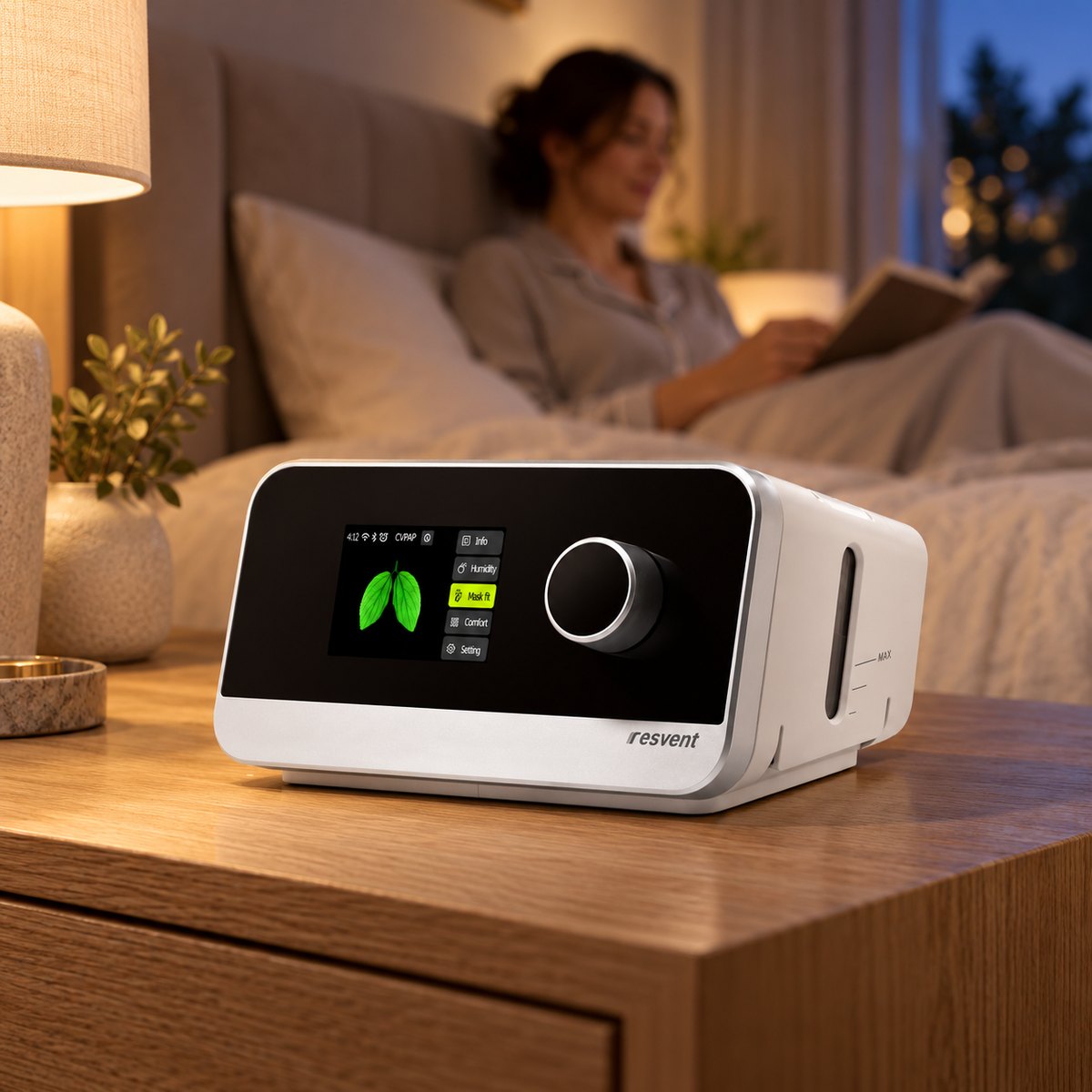
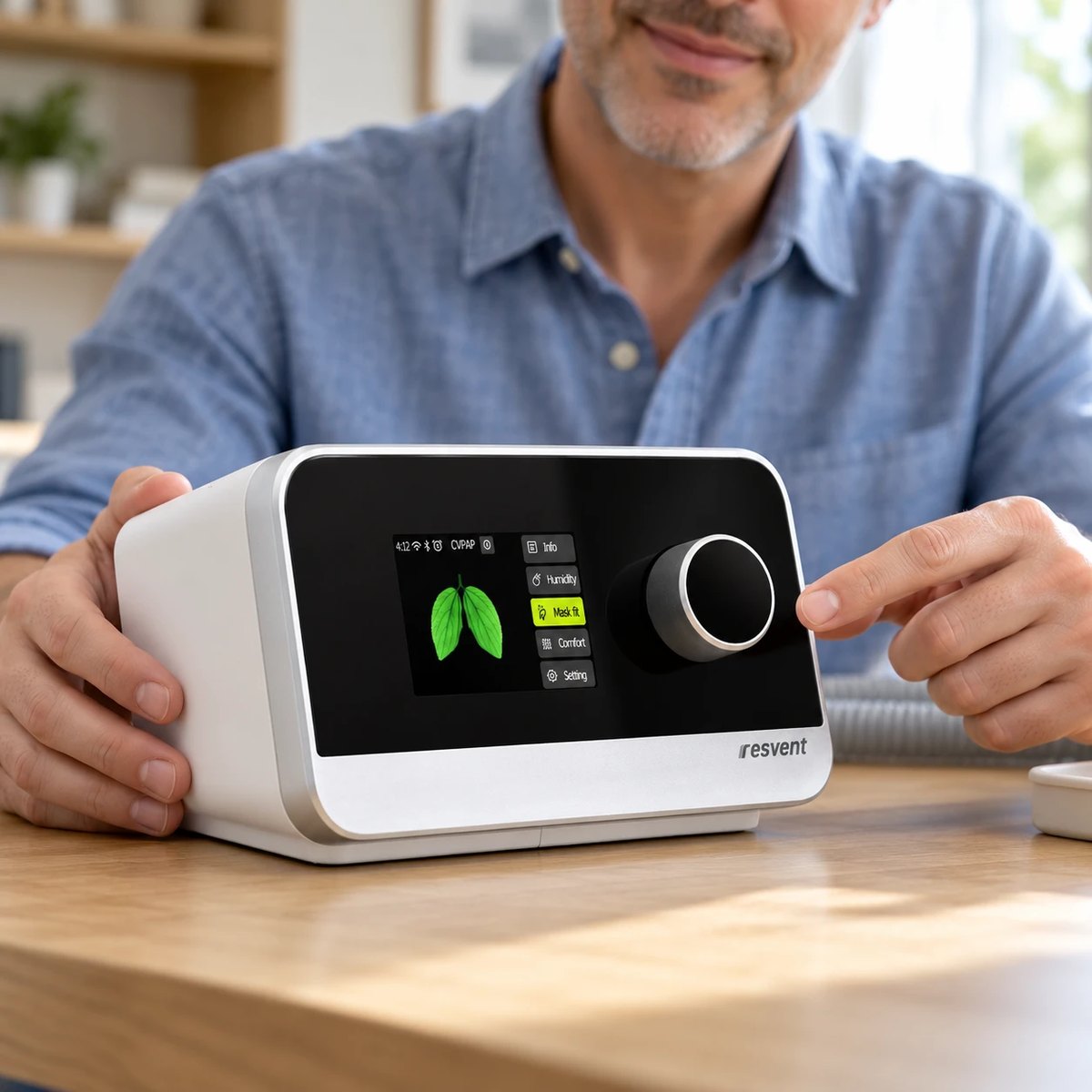
A BiPAP machine (short for bilevel positive airway pressure) is a non-invasive respiratory device that delivers two distinct air pressure levels through a mask: a higher pressure when the patient inhales (IPAP) and a lower pressure when they exhale (EPAP). That two-level design makes breathing feel more natural and, critically, provides active ventilatory support, which is why BiPAP is prescribed when standard CPAP therapy isn't enough.
This guide explains how bilevel therapy works, which conditions it treats, how it differs from CPAP, what the settings mean, and what homecare providers, hospitals, and distributors should know when adding bilevel devices like the iBreeze BiPAP to a respiratory fleet.
What does BiPAP stand for?
BiPAP stands for bilevel positive airway pressure. Strictly speaking, “BiPAP” began as one manufacturer's brand name for the therapy; the generic terms are bilevel PAP, BPAP, or bilevel ventilation. That's why you'll see the same device class labeled “BiPAP” in patient conversations and “BPAP” in clinical and product documentation, as with the Resvent iBreeze BPAP. In practice the terms are interchangeable, and this article uses BiPAP throughout.
How does a BiPAP machine work?
A BiPAP machine works by alternating between two prescribed pressure levels in sync with the patient's breathing cycle:
- IPAP (inspiratory positive airway pressure): the higher pressure delivered while the patient breathes in. It supports the effort of inhalation and increases the volume of air reaching the lungs.
- EPAP (expiratory positive airway pressure): the lower pressure maintained while the patient breathes out. It keeps the upper airway open (the same job CPAP does) while making exhalation noticeably easier than exhaling against a single fixed pressure.
- Pressure support: the difference between IPAP and EPAP. This is the therapeutic heart of bilevel therapy: it actively boosts each breath, increasing tidal volume and unloading fatigued respiratory muscles.
The machine's sensors detect the transition between inhalation and exhalation and switch pressures accordingly. Patient-device synchronization is what makes the therapy comfortable. Modern devices switch fast: the iBreeze BiPAP synchronizes with the patient's breathing in as little as 0.1 seconds, so pressure changes track the patient rather than fighting them.
What are the BiPAP therapy modes?
Bilevel devices operate in several clinician-selected modes, and understanding them explains most of the acronyms buyers encounter on spec sheets:
- S (Spontaneous): the device follows the patient's own breathing, switching between IPAP and EPAP as it detects each breath. Used when respiratory drive is intact.
- ST (Spontaneous-Timed): the device follows spontaneous breathing but adds a backup respiratory rate: if the patient doesn't initiate a breath within a set window, the machine triggers one. Essential for central sleep apnea and conditions where respiratory drive can fail.
- T (Timed): the device delivers breaths at a fixed clinician-set rate regardless of patient effort.
Many modern bilevel platforms also include a CPAP mode and volume-assurance algorithms. The iBreeze BiPAP offers S, ST, T, and CPAP modes plus EVAPS (Essential Volume Assured Pressure Support), which automatically adjusts pressure to maintain a clinician-set target tidal volume, important for patients whose ventilation needs vary through the night.
What is a BiPAP machine used for?
BiPAP is clinically indicated when a patient needs more than airway support: when they need help with the work of breathing itself. The most common indications:
- Central sleep apnea: the brain intermittently stops driving respiration; a backup rate (ST mode) delivers breaths when the patient's drive fails.
- COPD-OSA overlap syndrome: patients with both chronic obstructive pulmonary disease and obstructive sleep apnea need ventilatory support plus airway patency.
- Obesity hypoventilation syndrome (OHS): chronic underventilation requires pressure support to increase tidal volume and clear CO₂.
- Neuromuscular respiratory weakness: conditions like ALS or muscular dystrophy progressively weaken respiratory muscles; pressure support compensates.
- CPAP pressure intolerance: patients with severe OSA who need high pressures but cannot tolerate exhaling against them; BiPAP keeps IPAP high while dropping EPAP for comfort.
Equally important is what BiPAP is not for: straightforward obstructive sleep apnea, where CPAP or auto-CPAP remains the first-line, most cost-effective therapy. BiPAP is an escalation: prescribing or stocking it by default adds cost without clinical benefit.
BiPAP vs CPAP: what's the difference?
The short answer: CPAP delivers one constant pressure; BiPAP delivers two. CPAP holds the airway open: it treats obstruction. BiPAP additionally assists each breath with pressure support: it treats obstruction plus insufficient ventilation. CPAP is first-line for obstructive sleep apnea; BiPAP is prescribed for the complex cases above or after CPAP failure.
What are typical BiPAP settings?
BiPAP settings are prescribed and titrated by a clinician, usually from a titration study; patients don't self-adjust them. The core parameters:
- IPAP: commonly titrated anywhere in the device's range; the iBreeze BiPAP supports 4 to 30 cmH₂O.
- EPAP: set lower than IPAP (iBreeze range: 4 to 25 cmH₂O); enough to keep the airway open.
- Backup rate: in ST/T modes, the minimum breaths per minute the device guarantees.
- Trigger sensitivity: how readily the device detects the patient's effort and switches pressures.
For institutional fleets, remote settings management matters as much as the ranges: complex patients need frequent optimization, and cloud platforms like ResAssist™ let clinicians review therapy data and adjust pressures without a home visit.
Are there side effects or risks?
BiPAP is a well-established, non-invasive therapy, and most side effects are manageable: dryness and nasal congestion (addressed with integrated heated humidification), mask discomfort or air leaks (addressed with proper mask fitting), and aerophagia (swallowing air) which is less common on bilevel than on high fixed CPAP pressure precisely because exhalation pressure is lower.
Two boundaries matter. First, BiPAP requires clinical oversight: initiation and settings belong with the treating physician, especially for patients with progressive disease. Second, a BiPAP machine is not an invasive ventilator: it supports breathing through a mask but does not replace mechanical ventilation in critical care. Patients who depend heavily on ventilatory support need escalation pathways defined by their care team.
Do BiPAP machines use special masks?
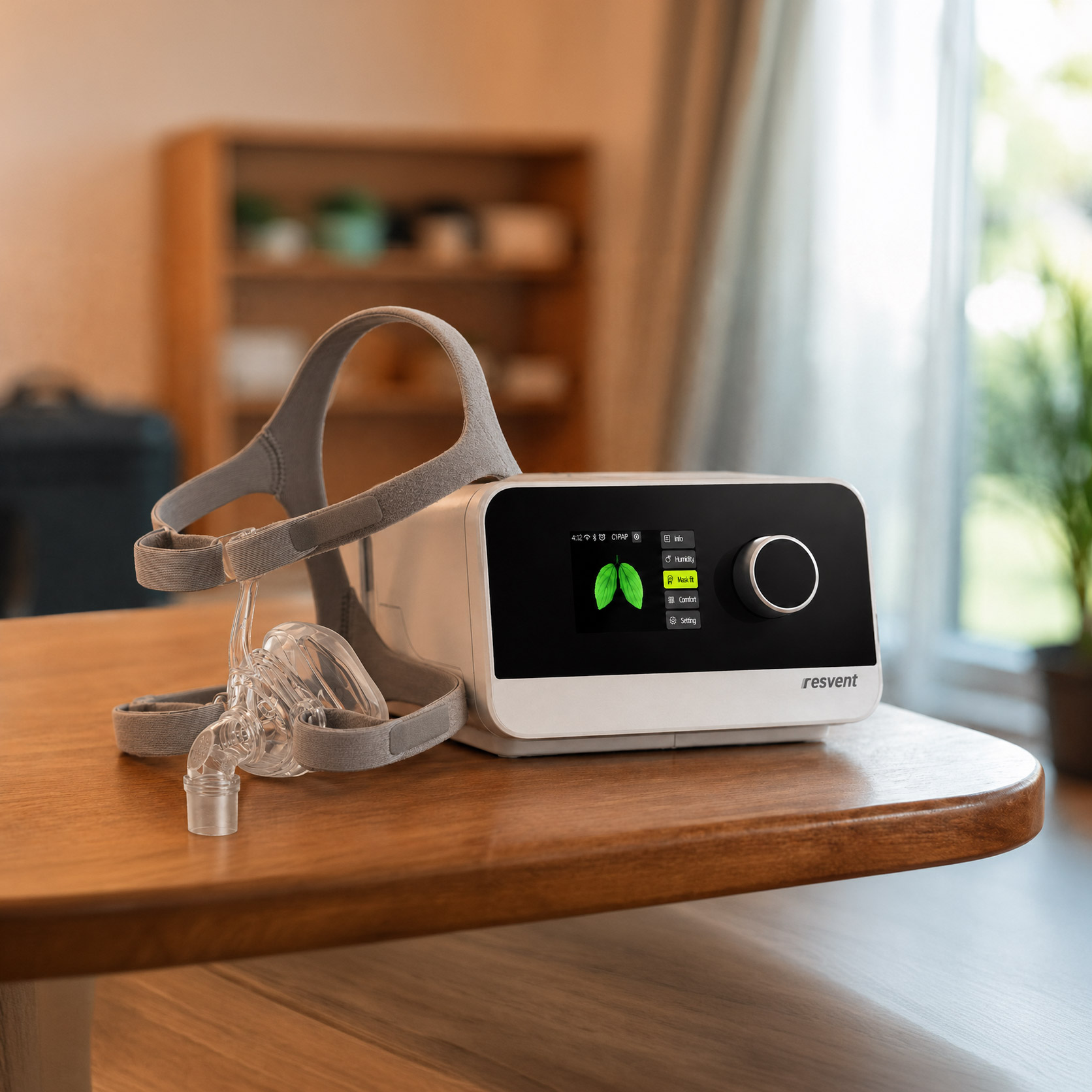
No, BiPAP devices use the same standard 22 mm mask interfaces as CPAP and APAP machines: nasal masks, nasal pillow masks, and full-face masks. Full-face masks are more common in bilevel therapy because many BiPAP patients breathe through the mouth or need higher pressures. For fleet buyers this is good news: one mask inventory serves the entire PAP device range.
How much does a BiPAP machine cost?
BiPAP machines cost more than CPAP devices, typically 1.5 to 3× the equivalent CPAP price at retail, because of the dual-pressure blower architecture, additional therapy modes, and volume-assurance algorithms. Retail prices vary widely by market, features, and connectivity options.
For institutional buyers, the more useful frame is fleet economics: BiPAP typically represents 10 to 20% of a balanced PAP inventory (matching the share of patients who clinically need it), and choosing a bilevel device that shares accessories, humidifiers, masks, and a cloud platform with the CPAP fleet, as the iBreeze line does, reduces training, spare-parts, and management overhead. Request wholesale pricing for volume quotes.
The iBreeze BiPAP: bilevel therapy built for institutional programs
The Resvent iBreeze BiPAP delivers the full bilevel clinical toolkit in the same platform ecosystem as the award-winning iBreeze CPAP/APAP line:
- Four therapy modes (S, ST, T, and CPAP) so therapy can evolve with the patient without replacing hardware.
- IPAP 4 to 30 cmH₂O / EPAP 4 to 25 cmH₂O with EVAPS volume-assured pressure support.
- 0.1-second patient synchronization and Intelligent Pressure Release for natural-feeling breaths.
- 5-inch touchscreen and integrated heated humidifier for simple patient operation at home.
- ResAssist™ cloud monitoring (pressure delivery, tidal volume trends, AHI, usage hours, and leak rates) with remote settings adjustment.
- CE marked, manufactured under ISO 13485 and GMP, with regulatory documentation available on request.
As the wholesale distribution channel for Resvent devices in Latin America, SysMed USA supplies the iBreeze BiPAP with the technical documentation, regulatory support, and after-sales service institutional procurement requires. Evaluating bilevel devices for your program? Request a quote or explore the full sleep therapy device line.
Frequently Asked Questions
What does BiPAP stand for?
BiPAP stands for bilevel positive airway pressure. The device delivers two distinct pressure levels: a higher inspiratory pressure (IPAP) that supports each breath in, and a lower expiratory pressure (EPAP) that keeps the airway open while making exhalation easier. “BiPAP” is technically a brand name popularized by one manufacturer: the generic terms are bilevel PAP or BPAP, which is why Resvent's device is named the iBreeze BPAP. In practice, the terms are used interchangeably.
Is a BiPAP machine the same as a ventilator?
No. A BiPAP machine provides non-invasive ventilatory support through a mask: the patient breathes on their own, and the device assists each breath with pressure support. An invasive mechanical ventilator takes over breathing entirely through an endotracheal or tracheostomy tube in critical care settings. BiPAP occupies the middle ground: it delivers more respiratory support than CPAP, and in ST or T modes it can provide a backup breathing rate, but it is a home and clinical therapy device, not life support equipment.
What conditions is a BiPAP machine used for?
BiPAP is clinically indicated when standard CPAP therapy is insufficient. Common indications include central sleep apnea (where the brain's respiratory drive fails), COPD-OSA overlap syndrome, obesity hypoventilation syndrome, neuromuscular respiratory weakness (such as ALS or muscular dystrophy), and obstructive sleep apnea patients who cannot tolerate high fixed CPAP pressures. For straightforward obstructive sleep apnea, CPAP or auto-CPAP remains the first-line therapy: BiPAP is an escalation, not a default.
What are typical BiPAP settings?
BiPAP settings are prescribed and titrated by a clinician: they are not self-adjusted. The two core settings are IPAP (inspiratory positive airway pressure) and EPAP (expiratory positive airway pressure); the difference between them, called pressure support, determines how much the device assists each breath. Devices in ST (spontaneous-timed) mode add a backup respiratory rate that triggers a breath if the patient doesn't. The iBreeze BiPAP supports IPAP from 4 to 30 cmH₂O, EPAP from 4 to 25 cmH₂O, and EVAPS volume-assured pressure support that auto-adjusts to maintain a clinician-set tidal volume.
How long can someone use a BiPAP machine?
There is no fixed limit: many patients use a BiPAP machine every night for years as long-term therapy for chronic conditions like sleep apnea, COPD overlap, or obesity hypoventilation. BiPAP manages these conditions rather than curing them, so therapy typically continues as long as the underlying condition persists. For patients with progressive diseases who depend on the device for many hours per day, usage duration and escalation decisions are made by the treating physician. Modern devices are engineered for sustained nightly operation, with cloud platforms like ResAssist™ letting clinicians monitor usage hours and therapy quality remotely.