Best CPAP Mask for Side Sleepers
Side sleeping is the most common sleep position — and the most problematic for CPAP therapy. Learn which mask types, features, and fitting protocols prevent leaks, improve PAP adherence, and reduce returns for institutional buyers.

Key Takeaways
- Nasal pillow masks are the first-line recommendation for side sleepers due to minimal facial contact, reduced pillow interference, and lower leak rates in positional patients.
- Look for adaptive cushioning, sub-30 dB noise levels, flexible headgear, and quick-release mechanisms when evaluating CPAP masks for side-sleeping patients in institutional or homecare programs.
- The iRiFiT N300 (nasal pillow) and F300 (full face) both feature swallowtail vent diffusers and low-tension seal technology engineered for positional sleepers — covering the full spectrum of patient breathing patterns.
- Full face masks work for side sleepers when they feature ergonomic frames and soft-edge adaptive cushions — mouth breathers should not default to nasal pillows despite the side-sleeping advantage.
- Institutional mask fitting protocols that include lateral position testing reduce 30-day mask exchange rates by matching patients to the right interface before deployment.
- Regular cushion replacement every 2–4 weeks (nasal pillows) or 1–3 months (full face) is critical for maintaining seal integrity, therapy efficacy, and patient compliance across any sleeping position.
Why Sleep Position Is the Most Overlooked Factor in CPAP Mask Selection
Continuous Positive Airway Pressure (CPAP) therapy remains the gold-standard treatment for obstructive sleep apnea (OSA). Yet mask-related discomfort is the leading cause of therapy non-adherence — and sleep position is the single biggest predictor of whether a mask will seal properly throughout the night.
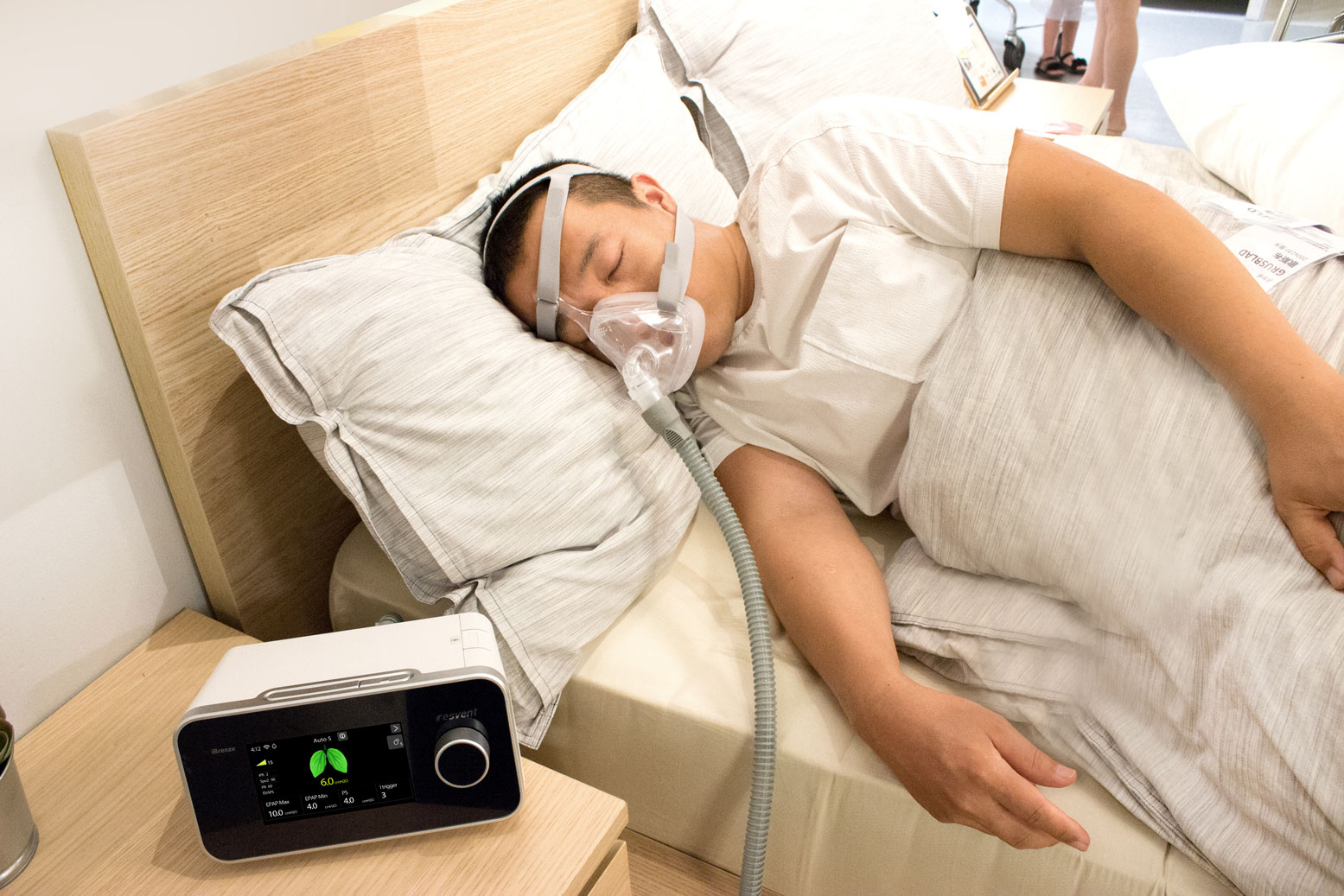
Research consistently shows that side sleeping (lateral decubitus position) is the most common sleep position, with estimates ranging from 54% to 74% of adults preferring it. Side sleeping also happens to be therapeutically beneficial for OSA patients because it reduces gravitational airway collapse compared to supine sleeping. But this preferred position creates a fundamental biomechanical conflict with CPAP mask interfaces: the pillow presses against the mask, distorts the cushion seal, shifts headgear straps, and generates air leaks that trigger arousals, dry eyes, and noise complaints.
For institutional buyers — wholesale mask distributors, homecare providers, hospital equipment managers, and DME companies — understanding the relationship between sleep position and mask performance is not just clinical knowledge. It directly impacts return rates, patient compliance metrics, reorder frequency, and total cost of ownership across a respiratory device fleet.
Choosing the best CPAP mask for side sleepers is a procurement decision as much as a clinical one.
How Side Sleeping Disrupts CPAP Mask Seal Integrity
To select the right mask, it helps to understand the specific failure modes that side sleeping introduces. These are not theoretical — they are the reasons patients call their providers at 2 AM and why DME companies process mask exchanges within the first 30 days.
Pillow-Induced Seal Displacement
When a patient lies on their side, the pillow surface contacts the mask frame, headgear, or tubing connection point. This external pressure pushes the mask asymmetrically against the face, breaking the cushion seal on one side while over-compressing it on the other. The result is a unilateral air leak — often directed toward the eyes, causing irritation and therapy interruption.
Headgear Strap Migration
Side sleeping causes the lower headgear straps to shift upward on the pillow-contact side and downward on the opposite side. Over the course of a night with multiple position changes, headgear tension becomes progressively uneven. By morning, the mask is sitting in a different position than where it was fitted.
Tubing Drag and Torque
Standard CPAP tubing connects at the front or top of the mask. When a side sleeper turns, the tubing pulls laterally across the pillow surface, creating rotational torque on the mask frame. This tubing drag compounds the seal disruption caused by pillow contact. Swivel connectors and top-of-head tubing routes help, but mask geometry remains the primary variable.
Pressure Point Discomfort
Masks with rigid frames, prominent forehead supports, or bulky exhalation ports create pressure points when compressed between the face and pillow. These pressure points cause skin redness, soreness, and long-term nasal bridge irritation — all of which drive patients to abandon therapy or demand mask exchanges.
CPAP Mask Types Ranked for Side Sleepers
Not all mask interfaces perform equally in the lateral position. Here is how the three primary CPAP mask types compare for side sleepers, ranked from most to least compatible:
1. Nasal Pillow Masks — Best Overall for Side Sleepers
Nasal pillow masks are the first-line recommendation for side sleepers in most clinical fitting protocols. They insert directly into the nostrils via soft silicone pillows, eliminating the facial footprint almost entirely.
Why they work for side sleepers:
- Minimal pillow contact — no frame surface area to displace against the pillow.
- Lightweight construction — typically under 50 grams, reducing inertial movement during position changes.
- No forehead support — eliminates the most common pressure-point complaint among side sleepers.
- Lower leak rates — the nasal seal is maintained by nostril insertion rather than facial surface tension, making it inherently resistant to external displacement.
Nasal pillow masks are ideal for patients who breathe through their nose, do not require high therapy pressures (generally under 15 cmH2O), and are not prone to significant nasal congestion.
2. Nasal Masks — Balanced Option for Moderate Needs
Nasal masks cover the nose with a triangular cushion and are held in place by headgear that wraps around the head. They offer more seal stability than nasal pillows at higher pressures but have a larger facial footprint that increases pillow interference.
Why they work for some side sleepers:
- Better high-pressure seal — maintains seal integrity at pressures above 15 cmH2O where nasal pillows may leak.
- Smaller than full face — reduced profile compared to oronasal masks means less pillow displacement.
- Works with mouth-leak chin straps — can be combined with a chin strap for patients who occasionally breathe through the mouth.
Nasal masks are a good middle-ground choice when nasal pillows do not provide enough seal surface or when the patient needs moderate-to-high therapy pressures.
3. Full Face Masks — Necessary for Mouth Breathers
Full face (oronasal) masks cover both the mouth and nose. They have the largest facial footprint and are the most susceptible to pillow-induced seal breaks. However, they are medically necessary for patients who breathe through the mouth during sleep — and mouth breathing is extremely common among OSA patients.
Why they still work for side sleepers (when designed correctly):
- Newer ergonomic frames are thinner and more flexible than legacy designs, reducing the rigid surface area that contacts the pillow.
- Adaptive cushion technology (like the V-rebound structure in the iRiFiT F300) conforms to asymmetric facial pressure rather than resisting it.
- Soft-edge silicone seals recover their shape after compression, maintaining seal integrity even after prolonged side-lying.
The clinical rule is clear: never fit a mouth breather into a nasal pillow just because they sleep on their side. A well-designed full face mask in the lateral position outperforms a nasal pillow with constant mouth leak.
Critical Features to Evaluate in CPAP Masks for Side Sleepers
Whether procuring masks for a homecare fleet, a hospital sleep lab, or a distributor warehouse, these are the technical features that differentiate a mask that works for side sleepers from one that generates complaints and returns:
Low-Profile Frame Geometry
The mask frame is the primary surface that contacts the pillow during side sleeping. Thinner frames with minimal projection from the face reduce pillow interference. Look for masks where the exhalation port, swivel connector, and tubing attachment are positioned to avoid direct pillow contact in the lateral position.
Adaptive Cushion Technology
Static silicone cushions that rely on even facial pressure for seal integrity will fail when side sleeping introduces asymmetric forces. Adaptive cushions use dual-wall construction, gel inserts, or memory foam substrates that deform independently along different facial planes. The iRiFiT F300's V-rebound design is an example of this approach — a dual-wall cushion that flexes independently around the nose bridge, cheeks, and chin.
Quiet Exhalation Diffusion (Sub-30 dB)
Air leaks caused by side sleeping are not just a seal problem — they are a noise problem. Directed air leak streams create whistling sounds that disturb both the patient and bed partner. Masks with swallowtail vent diffusers or multi-directional exhalation ports spread exhaled air across a wide arc, reducing noise even when the seal is slightly compromised. Both the iRiFiT N300 and F300 operate at ≤30 dB — well below conversational levels.
Flexible, Low-Tension Headgear
Rigid headgear designs require high strap tension to maintain seal, which creates pressure points during side sleeping. Flexible headgear with stretch-knit construction distributes tension more evenly and recovers its position after the patient moves. Look for quick-release clips that allow patients to remove the mask without readjusting strap length — critical for nighttime bathroom trips.
Compatibility with CPAP-Friendly Pillows
Some masks are specifically designed to work with contoured CPAP pillows that have cutouts for the mask and tubing. While the pillow is a separate purchase, mask compatibility with these pillows should factor into procurement decisions for homecare programs that include pillow recommendations in their patient setup kits.
Recommended CPAP Masks for Side Sleepers: iRiFiT Product Line
SysMed USA distributes the iRiFiT mask line — engineered by Resvent specifically to address the comfort and seal challenges that drive mask abandonment. Both masks in the line are optimized for positional sleepers.
iRiFiT N300 Nasal Pillow Mask
The iRiFiT N300 is the top recommendation for side sleepers who breathe through their nose. Key specifications:
- Weight: Ultra-lightweight construction with minimal facial contact points.
- Cushion: Adaptive silicone nasal pillows in three sizes (S, M, L) with a quick-swap mechanism for fitting sessions.
- Noise: Swallowtail vent diffuser at ≤30 dB — whisper-quiet operation even during position changes.
- Headgear: Flexible, stretch-knit headgear with magnetic clips for one-handed removal.
- Compatibility: Universal 22mm swivel connector works with all major CPAP devices including iBreeze CPAP/APAP, iBreeze BPAP, ResMed AirSense, and Philips DreamStation.
For institutional buyers, the N300 offers strong recurring revenue potential: nasal pillow cushions should be replaced every 2–4 weeks, generating 12–26 cushion purchases per active patient per year.
iRiFiT F300 Full Face Mask
The iRiFiT F300 is the solution for side sleepers who breathe through their mouth or require higher therapy pressures. Key specifications:
- Cushion technology: Adaptive V-rebound dual-wall cushion that conforms to asymmetric facial pressure — seals at lower headgear tension than traditional full face masks.
- Frame: Ergonomic low-profile structure designed to minimize pillow contact surface area.
- Safety: Anti-asphyxia valve for fail-safe breathing in case of device power loss.
- Headgear: Soft, skin-friendly fabric with adjustable tension points for personalized fit.
- Compatibility: Universal connector compatible with all major PAP platforms.
The F300 addresses the number-one reason patients reject full face masks: discomfort from excessive headgear tension. By sealing at lower tension, it reduces the pressure marks and claustrophobic feeling that drive abandonment — particularly important for side sleepers who experience amplified pressure points from pillow contact.
Institutional Mask Fitting Protocol for Side Sleepers
Proper mask fitting is not just a patient satisfaction issue — it is a cost control measure. Incorrect mask selection drives returns, exchanges, and compliance failures that cost institutional buyers time and margin. Here is a streamlined fitting protocol specifically designed for side-sleeping patients:
Step 1: Breathing Pattern Assessment
Determine whether the patient is a nasal breather, mouth breather, or combination breather. This is the primary decision branch: nasal breathers go to nasal pillows (N300), mouth breathers go to full face (F300), and combination breathers need clinical judgment based on leak severity.
Step 2: Pressure Level Review
Check the prescribed therapy pressure. Nasal pillow masks are generally reliable up to 15 cmH2O. Above that threshold, nasal masks or full face masks provide more stable seal performance.
Step 3: Supine Fit Verification
Fit the mask with the patient lying on their back first. Verify seal with the CPAP device running at prescribed pressure. Adjust headgear tension to the minimum required for seal — do not over-tighten.
Step 4: Lateral Position Testing
This is the step most fitting sessions skip — and it is the most important for side sleepers. Have the patient turn onto their preferred side while the device is running. Observe the mask for seal breaks, air leaks, headgear shift, and comfort complaints. If the mask leaks significantly in the lateral position, switch to a different mask type or size rather than increasing headgear tension.
Step 5: Documentation and Follow-Up
Record the mask type, size, and any positional adjustments made. Schedule a 7–14 day follow-up to review device-reported leak data and patient-reported comfort. Early intervention reduces 30-day exchange rates.
Compliance and Cost Considerations for Institutional Buyers
For wholesale mask procurement, side-sleeping compatibility is a portfolio consideration, not just a per-patient decision. Programs that stock both nasal pillow and full face options — like the iRiFiT N300 and F300 — cover the full spectrum of patient needs without relying on a single mask type.
Mask Replacement Frequency and Recurring Revenue
CPAP masks are the highest-frequency consumable in the PAP therapy ecosystem. Replacement schedules create predictable recurring revenue:
- Nasal pillow cushions: Every 2–4 weeks (12–26 replacements per patient per year)
- Full face cushions: Every 1–3 months (4–12 replacements per patient per year)
- Headgear: Every 6 months for both types
- Complete masks: Every 3–6 months depending on usage and insurance guidelines
For distributors and homecare providers, masks generate more recurring revenue per patient than the PAP device itself — which is purchased once every 3–5 years.
Reducing Return and Exchange Rates
The most expensive mask is the one that comes back. Mask exchanges cost institutional buyers shipping, restocking, staff time, and patient dissatisfaction. Implementing the lateral position testing step in fitting protocols directly reduces exchange rates by catching positional seal failures before the patient goes home.
Connected Device Compliance Monitoring
Modern CPAP devices like the iBreeze report mask leak data via cloud platforms like ResAssist. Institutional buyers with connected device fleets can monitor leak trends across their patient population, identify patients with persistent positional leaks, and proactively intervene with mask adjustments or replacements before the patient disengages from therapy.
Practical Tips for Side Sleepers Using CPAP
Whether advising patients directly or providing educational materials in a homecare setup kit, these evidence-based recommendations improve outcomes for side sleepers on CPAP therapy:
- Use a CPAP-compatible pillow: Contoured pillows with mask cutouts prevent direct pillow-to-mask contact and reduce seal displacement. Some programs include these in their patient onboarding kits.
- Set headgear tension while lying on your side: Most patients adjust headgear while sitting up — but the seal needs to work in the sleeping position. Adjust tension in the lateral position at prescribed pressure.
- Route tubing over the headboard or use a tube management system: Reducing tubing drag eliminates one of the three main sources of positional mask displacement.
- Replace cushions on schedule: Silicone cushions lose elasticity and surface texture over time. A new cushion seals better than a worn cushion at higher headgear tension — do not compensate for cushion degradation by tightening straps.
- Report persistent leaks to your provider early: Connected CPAP devices track leak data automatically. If average nightly leak exceeds 24 L/min consistently, a mask refit or type change may be needed.
Conclusion
Selecting the best CPAP mask for side sleepers requires understanding the biomechanical challenges of lateral sleeping, matching mask type to breathing pattern, and implementing fitting protocols that test seal integrity in the actual sleeping position. For institutional buyers — distributors, homecare providers, and hospital systems — this is a portfolio and process decision that directly impacts patient compliance, return rates, and recurring revenue.
The iRiFiT N300 nasal pillow mask and iRiFiT F300 full face mask together cover the full range of side-sleeping patients. Combined with the iBreeze CPAP/APAP platform and ResAssist cloud monitoring, they form a complete therapy system optimized for both clinical outcomes and institutional efficiency.
Request wholesale pricing for the iRiFiT mask line or explore the complete masks and interfaces catalog.
References
- American Academy of Sleep Medicine — Clinical Practice Guidelines for the Treatment of Central Sleep Apnea in Adults (2025)
- National Heart, Lung, and Blood Institute — CPAP Therapy Overview
- U.S. Food & Drug Administration — Respiratory Devices Information and Regulatory Guidance
- Ravesloot MJL, et al. — The Undervalued Potential of Positional Therapy in Position-Dependent Obstructive Sleep Apnea. Sleep and Breathing.
- Weaver TE, Grunstein RR — Adherence to Continuous Positive Airway Pressure Therapy: The Challenge of Effective Treatment. Proceedings of the American Thoracic Society.
Frequently Asked Questions
When should a clinician recommend the iRiFiT N300 nasal mask over a full face mask like the F300?
Nasal masks are the first-line recommendation for most new PAP patients because they're less invasive, lighter, and have a smaller facial footprint. The N300 is ideal for patients who: breathe primarily through their nose, don't have significant nasal obstruction, sleep on their side or stomach, and feel claustrophobic with full face coverage.
Full face masks like the F300 become necessary when patients are mouth breathers, have chronic nasal congestion, or need higher pressures where mouth leak becomes problematic. Some clinicians start with a nasal mask and switch to full face only if mouth leak data shows it's needed. For distributors, stocking both the N300 and F300 covers the full spectrum — and selling both as part of a mask fitting session is standard practice in well-run sleep programs.
How does the iRiFiT F300's adaptive V-rebound design create a better seal than traditional full face masks?
Traditional full face masks rely on a single silicone cushion pressed against the face by headgear tension. The F300 uses an adaptive "V" rebound structure — a dual-wall cushion that flexes independently along different facial planes. Instead of one pressure point that either seals or doesn't, the V-rebound conforms around the nose bridge, cheeks, and chin separately.
The result: a secure seal at lower headgear tension, which reduces the pressure marks, skin irritation, and claustrophobic feeling that drive full face mask abandonment. For DME providers, this translates to fewer mask exchanges and returns. Patients who previously couldn't tolerate full face masks due to discomfort may succeed with the F300's lower-pressure fit approach.
What sizes does the N300 come in, and how often should nasal cushions be replaced?
The N300 ships in three sizes (S, M, L) with an included sizing guide. Nasal anatomy varies significantly across populations, so stocking all three sizes is recommended. Medium covers roughly 55–60% of patients, but the small and large sizes are essential for proper fitting sessions.
Replacement schedule: nasal cushions should be replaced every 2–4 weeks for optimal seal and hygiene — more frequently than full face cushions because the smaller surface area degrades faster from skin oils and moisture. Headgear lasts approximately 6 months. This high replacement frequency makes nasal masks an even stronger recurring revenue product than full face masks. At 2–4 week cushion intervals, a single active patient generates 12–26 cushion purchases per year.
How often should the iRiFiT F300 be replaced, and what does this mean for distributor recurring revenue?
Clinical guidelines and most insurance reimbursement schedules recommend full face mask replacement every 3 months, with cushion-only replacements at 1–2 month intervals depending on usage. Headgear typically lasts 6 months before the elasticity degrades enough to affect seal quality.
For distributors, masks are the highest-frequency consumable in the PAP ecosystem — patients need 4 masks per year versus one device purchase every 3–5 years. This creates a predictable recurring revenue stream that compounds with each device sold. The F300's universal compatibility means it can capture replacement volume from patients using any PAP brand, not just iBreeze users. SysMed offers volume pricing on mask quantities that reflects the consumable nature of the product.