5 and 10 Liter Oxygen Concentrators
Oxygen concentrators are electric medical devices that draw in room air, remove most of the nitrogen and deliver oxygen at about 93% purity through a nasal cannula. Stationary 5 and 10 liter units serve prescribed home oxygen therapy, clinics and homecare fleets, and every patient needs a physician's prescription for flow and hours of use.
Available models

Oxygen concentrator buying guide
Equipping a hospital, homecare program or distribution network?
Request a wholesale quoteAn oxygen concentrator makes oxygen from room air, with no refills or deliveries. Choosing the right one comes down to three things: the flow rate on the prescription, where the unit will be used, and who manages it (a single patient, a clinic, or a homecare program running dozens of units).
How does an oxygen concentrator work?
Room air is about 21% oxygen and 78% nitrogen. A concentrator draws air in, filters it and uses a compressor to push it through two sieve beds filled with zeolite, which trap nitrogen. The beds alternate under pressure, a process called pressure swing adsorption (PSA), and the unit delivers a continuous flow of oxygen at roughly 93% purity, measured in liters per minute (LPM), through a nasal cannula or mask.
5 liter vs 10 liter oxygen concentrator
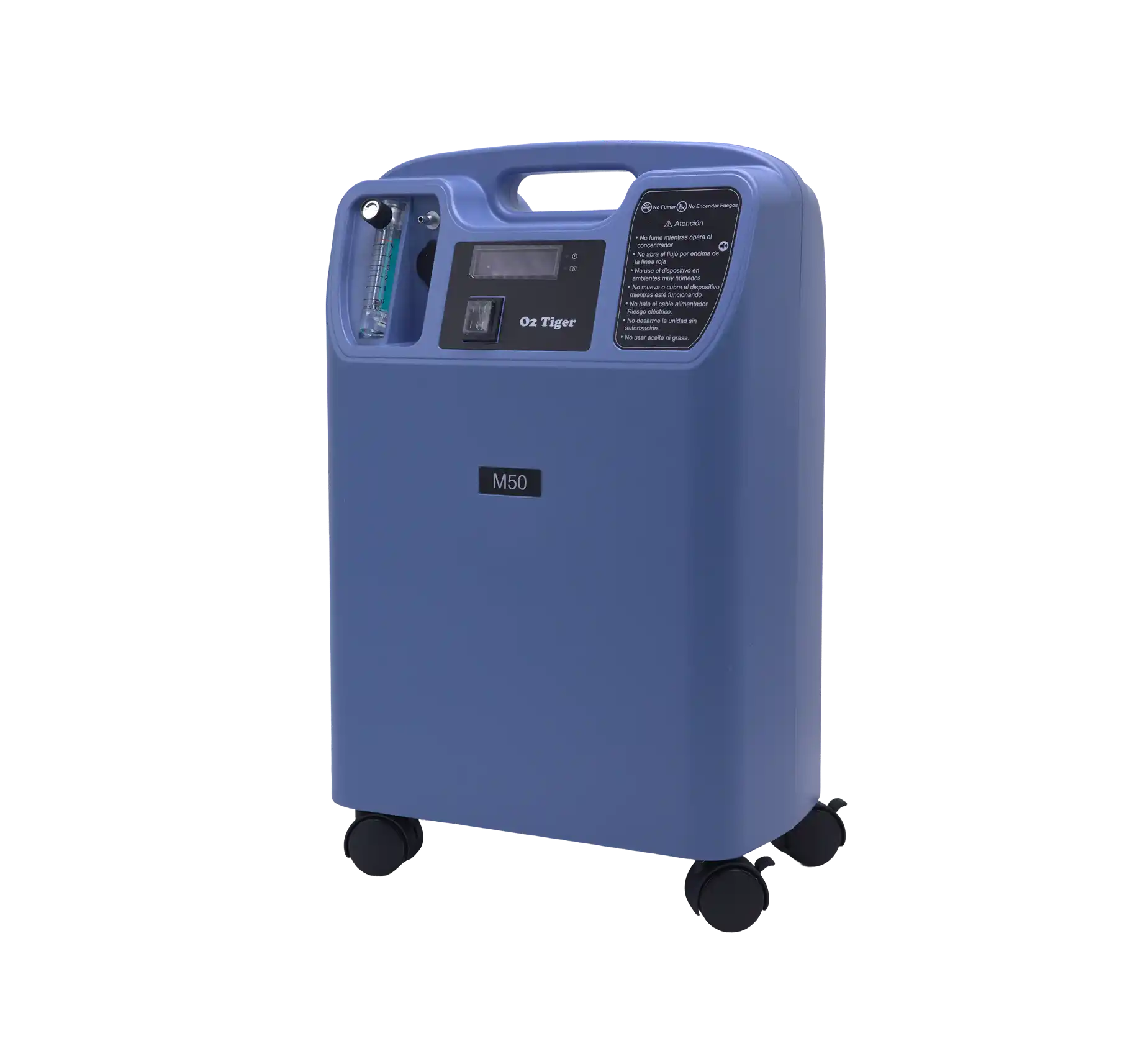
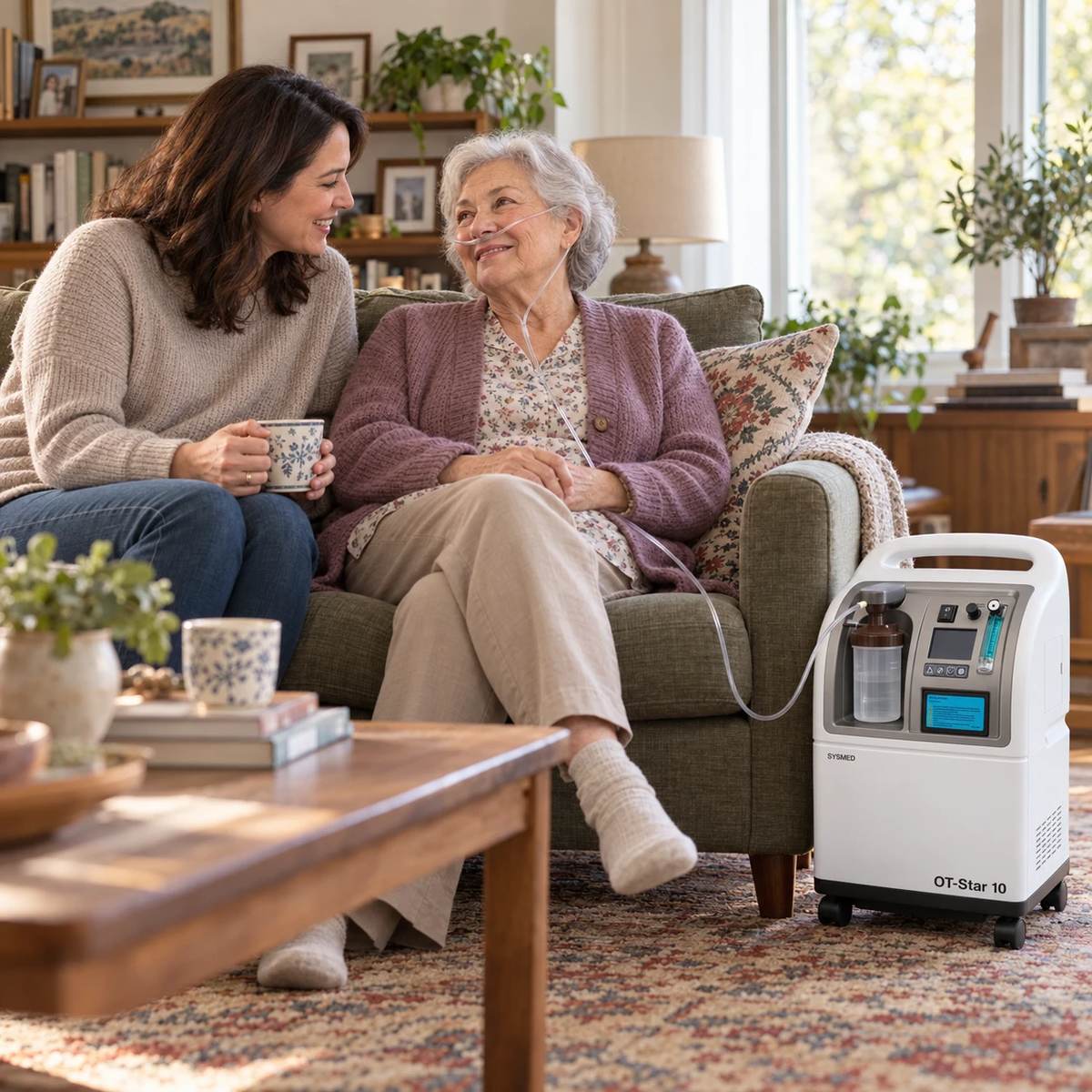
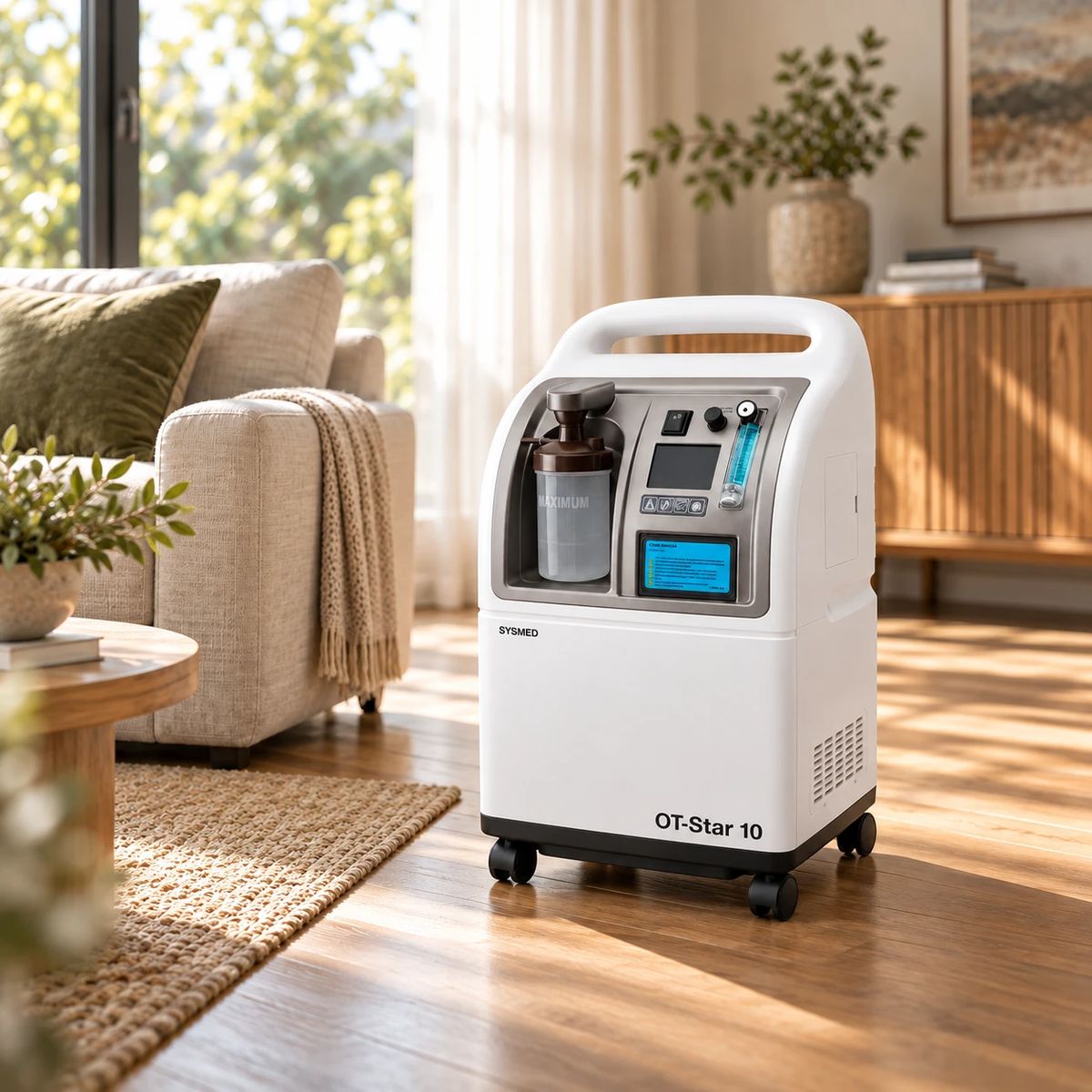
The liter rating is the maximum flow. The physician prescribes the LPM and the hours per day, and the unit should cover that number with some margin. Most home prescriptions fall between 1 and 5 LPM, so a 5 liter oxygen concentrator such as the O2 Tiger M50 (1 to 5 LPM, 93% ±3% purity, 14.2 kg) covers most patients. A 10 liter oxygen concentrator such as the OT-Star 10 (1 to 10 LPM, 93% ±3% up to 8 LPM and 90% ±3% at 10 LPM) serves patients who need higher flow without switching to cylinders.
Home oxygen therapy is prescribed for conditions such as COPD and other chronic lung diseases that cause low blood oxygen. It always requires a prescription: the physician, not the seller, sets the flow, the hours of use and the follow up.
Stationary vs portable oxygen concentrators
Both SysMed USA models are stationary: they plug into the wall, deliver continuous flow and are built for the home, the clinic or the hospital ward. Portable concentrators run on batteries and weigh a few kilograms; many deliver oxygen in pulses as the patient inhales, and their continuous flow, where offered, is lower. If the patient leaves home daily, travels or works, a portable unit from another manufacturer may be the better fit, often paired with a stationary unit for the night. SysMed USA does not distribute portable concentrators.
Noise, power use and maintenance
The O2 Tiger M50 runs at ≤45 dB and draws 300 W; the OT-Star 10 runs at ≤50 dB and draws up to 600 W. Running 24 hours a day, 300 W comes to about 7.2 kWh per day. Routine care is simple: wash the air intake filter as the manual directs, use distilled water in the humidifier bottle, replace the nasal cannula and tubing on the manufacturer's schedule, and leave clear space around the unit so it can ventilate. Both models ship with a humidifier bottle and a nasal cannula.
Oxygen concentrator vs oxygen tank
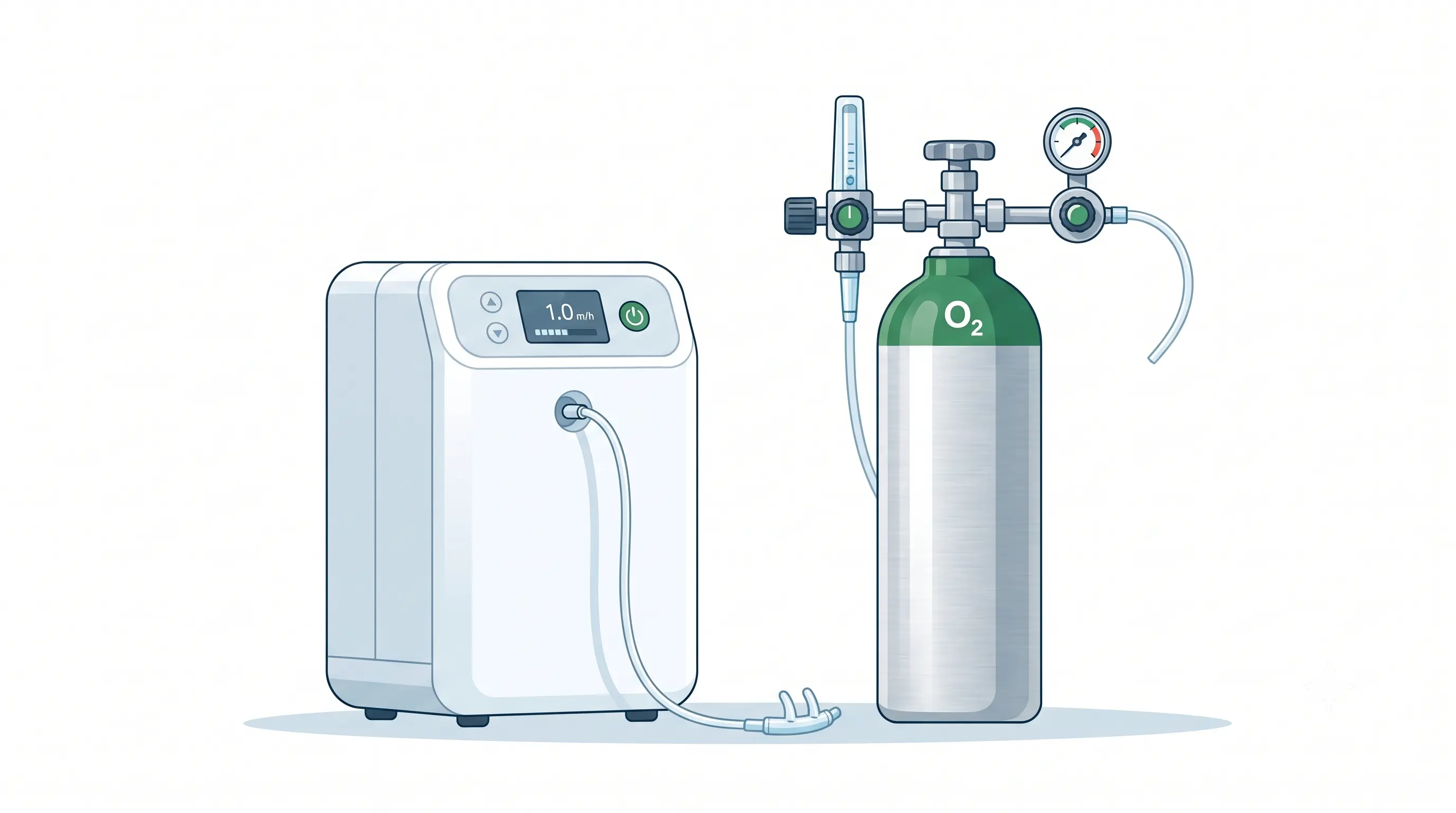
An oxygen tank (cylinder) needs no electricity, but it runs out and must be refilled or swapped. A concentrator produces oxygen for as long as it has power. For home oxygen programs with many patients, concentrators remove refill routes and cylinder deliveries, while a cylinder stays on hand as backup for power outages when the physician recommends it.
Buying for hospitals, homecare programs and distributors
Institutional buyers should weigh more than the unit price:
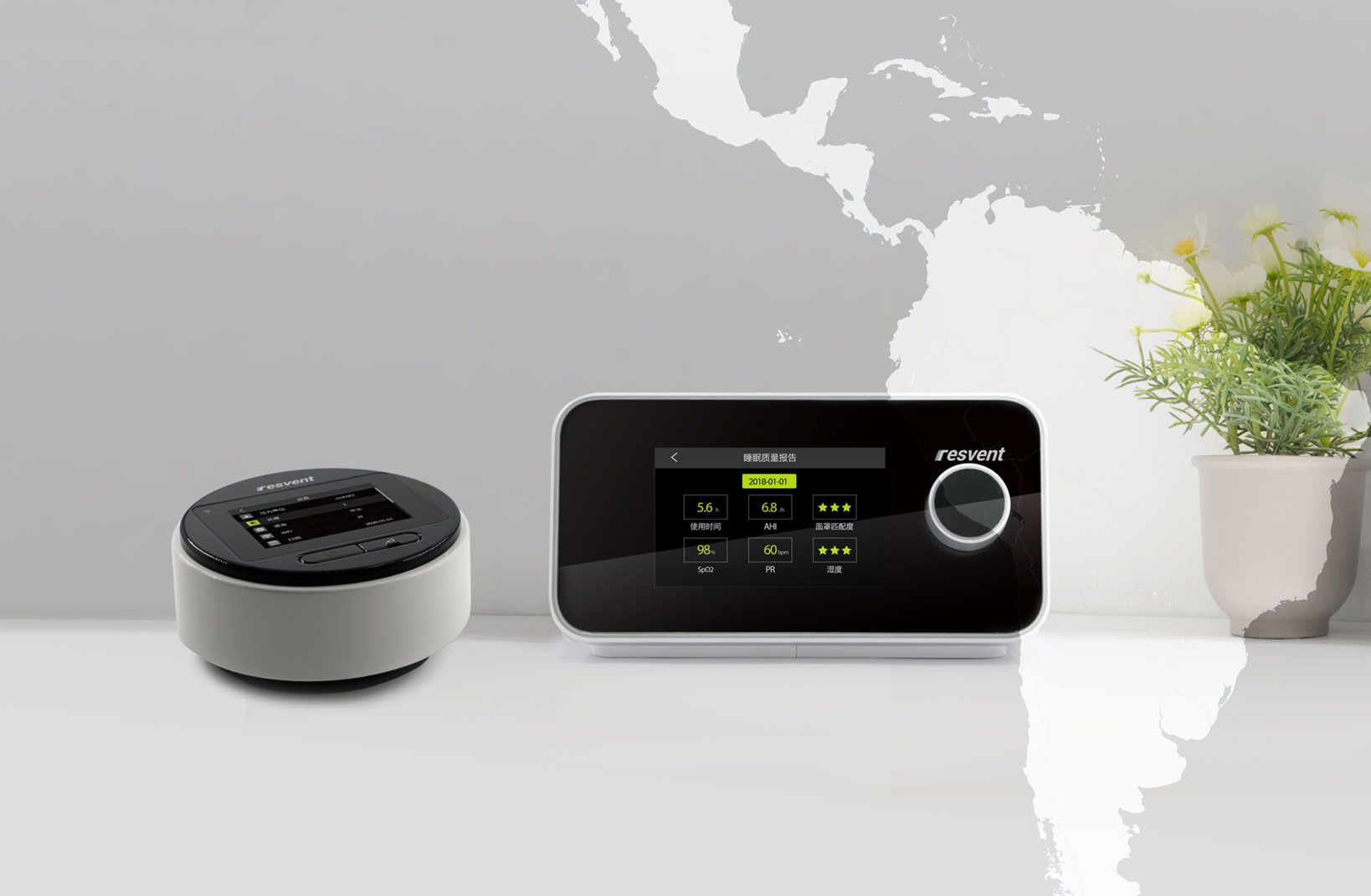
- Fleet tracking: both models accept an optional GSM module for geolocation and usage monitoring, which helps recover units that patients do not return. See how connected CPAP and oxygen concentrators work.
- Power stability: where voltage swings or outages are common, budget for voltage regulators and a backup cylinder per patient.
- Registration: in Latin America, the import and sale of medical devices is regulated by each country's health authority, such as COFEPRIS (Mexico), INVIMA (Colombia), ISP (Chile), ANMAT (Argentina) and DIGEMID (Peru). Both models are CE marked and made in an ISO 13485 certified facility, and SysMed USA supplies the supporting documents for registration (registro sanitario). Read why FDA and CE certifications matter in Latin America.
- Fleet mix: stock 5 liter units for most patients and 10 liter units for high flow cases.
Oxygen concentrator comparison: 5 liter vs 10 liter vs portable vs cylinder
| Option | Flow | Purity | Weight | Power | Best for | SysMed model |
|---|---|---|---|---|---|---|
| 5 liter stationary concentrator | 1 to 5 LPM, continuous | 93% ±3% at 5 LPM | 14.2 kg | 300 W, wall outlet | Home prescriptions up to 5 LPM and homecare fleets | O2 Tiger M50 |
| 10 liter stationary concentrator | 1 to 10 LPM, continuous | 93% ±3% up to 8 LPM; 90% ±3% at 10 LPM | 26 kg | Up to 600 W, wall outlet | Higher flow patients, clinics and hospital wards | OT-Star 10 |
| Portable concentrator | Pulse dose; low continuous flow on some models | Varies by model | A few kilograms | Rechargeable battery | Patients who leave home often or travel | Not offered by SysMed USA |
| Oxygen cylinder (tank) | Set by the regulator | Compressed medical oxygen | Varies by cylinder size | No electricity needed; must be refilled | Backup during power outages and occasional use | Not applicable |
How much does an oxygen concentrator cost?
Public retail ranges by country. SysMed USA quotes by volume and does not publish prices.
Need volume pricing with CE and ISO 13485 documentation?
Request a wholesale quoteA new stationary 5 liter oxygen concentrator sells for roughly USD 430 to 2,060 in Latin American online stores, and a 10 liter unit for roughly USD 720 to 2,960, depending on the country, brand and retail channel. These are public retail prices, not SysMed USA prices.
| Country | 5 liter concentrator | 10 liter concentrator |
|---|---|---|
| Mexico | MXN 7,900 to 22,900 (about USD 430 to 1,250) | MXN 17,000 to 43,000 (about USD 930 to 2,350) |
| Colombia | COP 2.5 to 6.8 million (about USD 760 to 2,060) | COP 4.6 to 9.8 million (about USD 1,390 to 2,960) |
| Chile | CLP 460,000 to 890,000 (about USD 470 to 910) | CLP 700,000 to 1.89 million (about USD 720 to 1,940) |
| Argentina | ARS 1.08 to 1.67 million (about USD 710 to 1,100) | ARS 1.9 to 3.36 million (about USD 1,250 to 2,210) |
| Peru | PEN 2,000 to 5,800 (about USD 580 to 1,680) | PEN 2,800 to 6,500 (about USD 810 to 1,880) |
What drives the price
- Maximum flow: 10 liter units cost more than 5 liter units.
- Brand and service network: brands with local technical service and spare parts sit at the top of the range.
- Features: oxygen purity sensor, alarms, hour counter, dual flow outlet, nebulizer function or connectivity.
- Import costs and exchange rates: taxes, freight and currency swings move prices quickly, especially in Argentina.
- Kit contents and warranty: humidifier, cannulas, distilled water and warranty terms vary by seller.
Renting is also common: in Mexico, 10 liter units rent from about MXN 3,190 a month, and in Lima monthly rentals run about PEN 350 to 550.
Reference ranges from online stores, October 2026. New stationary units only; portable, used and rental listings are excluded. USD conversions are approximate, using exchange rates from October 2, 2026.
Buying for a hospital, homecare network or distributor? SysMed USA does not publish prices: we quote by volume, with CE and ISO 13485 documentation for registration and the optional GSM fleet module. Request a wholesale quote.
Frequently asked questions
Need volume pricing or import documents for your country?
Request a quoteHow much does an oxygen concentrator cost?
In Latin American online stores, a new stationary 5 liter oxygen concentrator costs roughly USD 430 to 2,060, and a 10 liter unit roughly USD 720 to 2,960 (October 2026). In Mexico, 5 liter units list for about MXN 7,900 to 22,900 and 10 liter units for about MXN 17,000 to 43,000.
Price depends on maximum flow, brand and service network, features such as purity alarms, and import costs. Portable concentrators cost more, and renting is a common alternative for short term use. Hospitals, homecare providers and distributors buying in volume can request a wholesale quote from SysMed USA.
What is the difference between a 5 liter and a 10 liter oxygen concentrator?
The liter rating is the maximum flow the unit can deliver, in liters per minute (LPM). A 5 liter concentrator covers prescriptions from 1 to 5 LPM, which includes most home oxygen patients. A 10 liter concentrator reaches up to 10 LPM for patients who need higher flow.
The 10 liter unit is also larger and uses more power. For example, the O2 Tiger M50 (5 L) weighs 14.2 kg and draws 300 W, while the OT-Star 10 weighs 26 kg and draws up to 600 W. Choose the unit that covers the prescribed flow with some margin; the physician sets the flow.
How does an oxygen concentrator work?
An oxygen concentrator draws in room air, which is about 21% oxygen and 78% nitrogen, filters it and compresses it through two beds of zeolite sieve material that trap nitrogen. The beds alternate under pressure in a process called pressure swing adsorption (PSA).
The result is a continuous flow of oxygen at roughly 93% purity, delivered through a nasal cannula at the rate the physician prescribes. The unit runs on electricity and never needs refilling. Stationary models such as the OT-Star 10 and the O2 Tiger M50 include a humidifier bottle for comfort.
Oxygen concentrator vs oxygen tank: which is better for home use?
For long term home oxygen therapy, a concentrator is usually more practical: it makes oxygen from room air for as long as it has power, so there are no refills, deliveries or empty tanks. An oxygen tank (cylinder) holds a finite supply but needs no electricity.
That is why many home programs use both: a stationary concentrator as the main source and a cylinder as backup for power outages or short trips. For homecare providers, concentrators also remove the cost and logistics of cylinder refill routes. The physician decides which source fits each patient.
Do you need a prescription for an oxygen concentrator?
Yes. Oxygen is treated as a medication, and home oxygen therapy should start only with a physician's prescription that sets the flow in liters per minute, the hours of use per day and the follow up plan. The physician also decides when to adjust or stop the therapy.
The import and sale of the device are regulated by each country's health authority, such as COFEPRIS in Mexico, INVIMA in Colombia, ISP in Chile, ANMAT in Argentina or DIGEMID in Peru. The OT-Star 10 and the O2 Tiger M50 are CE marked and manufactured under ISO 13485, and SysMed USA provides documentation to support registration.
How much electricity does an oxygen concentrator use?
It depends on the model and the flow setting. A 5 liter unit such as the O2 Tiger M50 draws 300 W, which is about 7.2 kWh per day, or 216 kWh per month, if it runs 24 hours a day. A 10 liter unit such as the OT-Star 10 draws up to 600 W, or up to 14.4 kWh per day at full load.
Multiply those figures by your local electricity rate to estimate the monthly cost. Because a concentrator stops when the power goes out, patients in areas with frequent outages usually keep a backup cylinder as their physician advises, and institutions should plan for voltage protection.
What maintenance does an oxygen concentrator need?
Routine care is simple. Wash the air intake filter as the user manual directs, use only distilled water in the humidifier bottle and clean the bottle regularly, and replace the nasal cannula and tubing on the schedule set by the manufacturer or your provider. Keep the unit away from walls and curtains so it can ventilate, and away from heat sources or open flames.
Internal filters and sieve beds are serviced by a trained technician following the manufacturer's service schedule, and homecare providers should log each service by serial number. Each SysMed USA unit ships with a humidifier bottle, a nasal cannula and a user manual in English and Spanish.
Related guides

Why distributors choose SysMed USA
A wholesale distributor of respiratory therapy devices built for B2B buyers: homecare providers, distributors and hospital procurement teams across Latin America.
Every device comes from Resvent Medical Technology, an ISO 13485 certified manufacturer with CE marking and registrations across Latin America.
Stock held in our US facility for fast fulfillment to Mexico, Colombia, Argentina, Chile, Costa Rica, Panama, Ecuador and Uruguay.
CE and ISO 13485 documentation to support registro sanitario with each country's health authority.