CPAP vs BiPAP vs APAP: Which PAP Device for Institutional Buyers?
CPAP, BiPAP and APAP treat different severities of sleep-disordered breathing. Learn the clinical differences, pressure delivery and which PAP device to stock.

Key Takeaways
- CPAP delivers a single fixed pressure and is the first-line therapy for most patients with obstructive sleep apnea (OSA), accounting for the bulk of institutional PAP device procurement.
- APAP (Auto-CPAP) automatically adjusts pressure within a physician-set range, responding to breathing events in real time, which reduces over-pressurization, improves comfort and lowers early therapy dropout rates.
- BiPAP (bilevel PAP) delivers separate inspiratory and expiratory pressures, making it clinically necessary for patients with central sleep apnea, obesity hypoventilation, COPD overlap or intolerance to pressures above 15 cmH2O.
- For institutional buyers, APAP devices offer the greatest procurement flexibility because one device can run as fixed CPAP or auto-adjusting APAP, reducing SKU complexity and inventory costs.
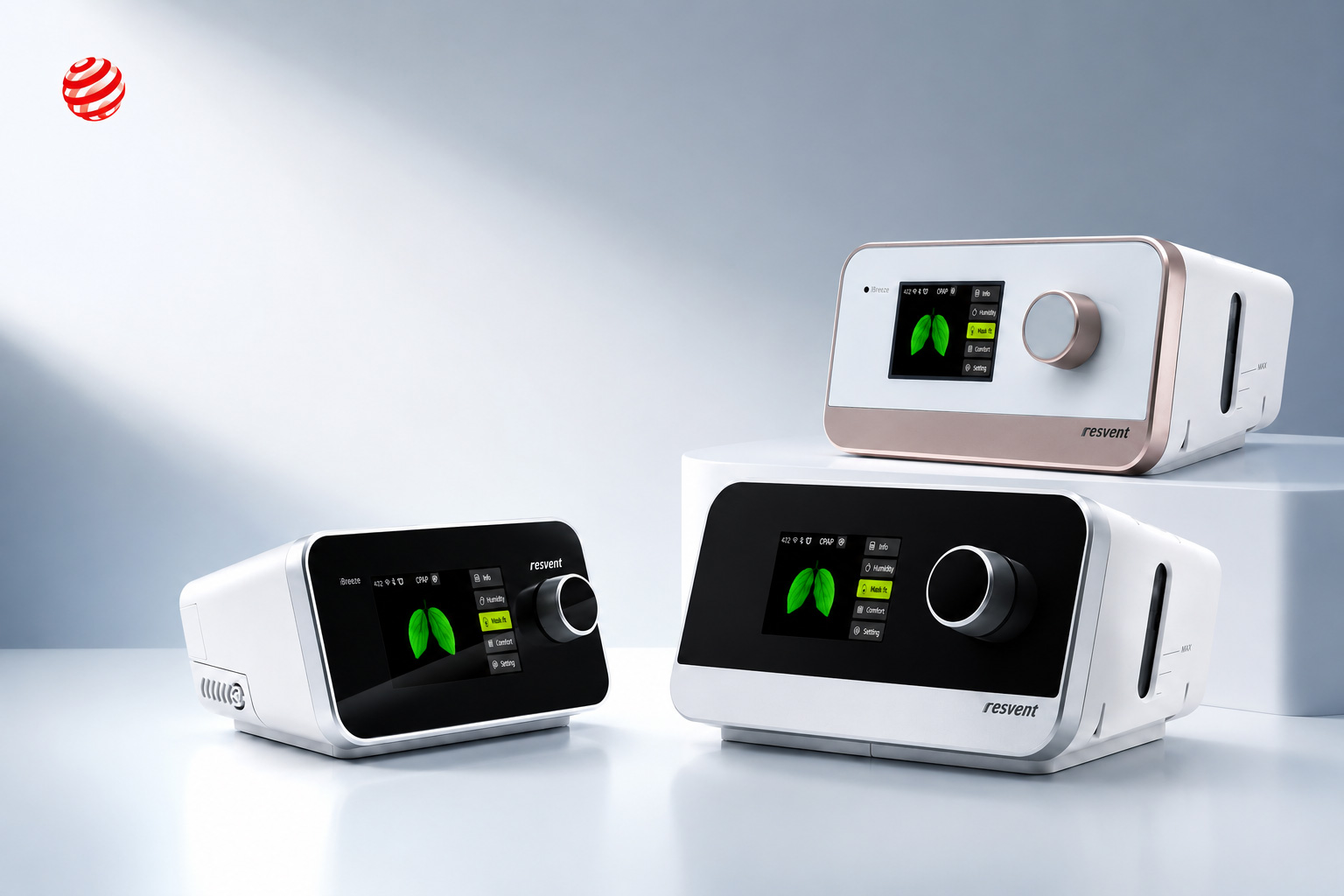
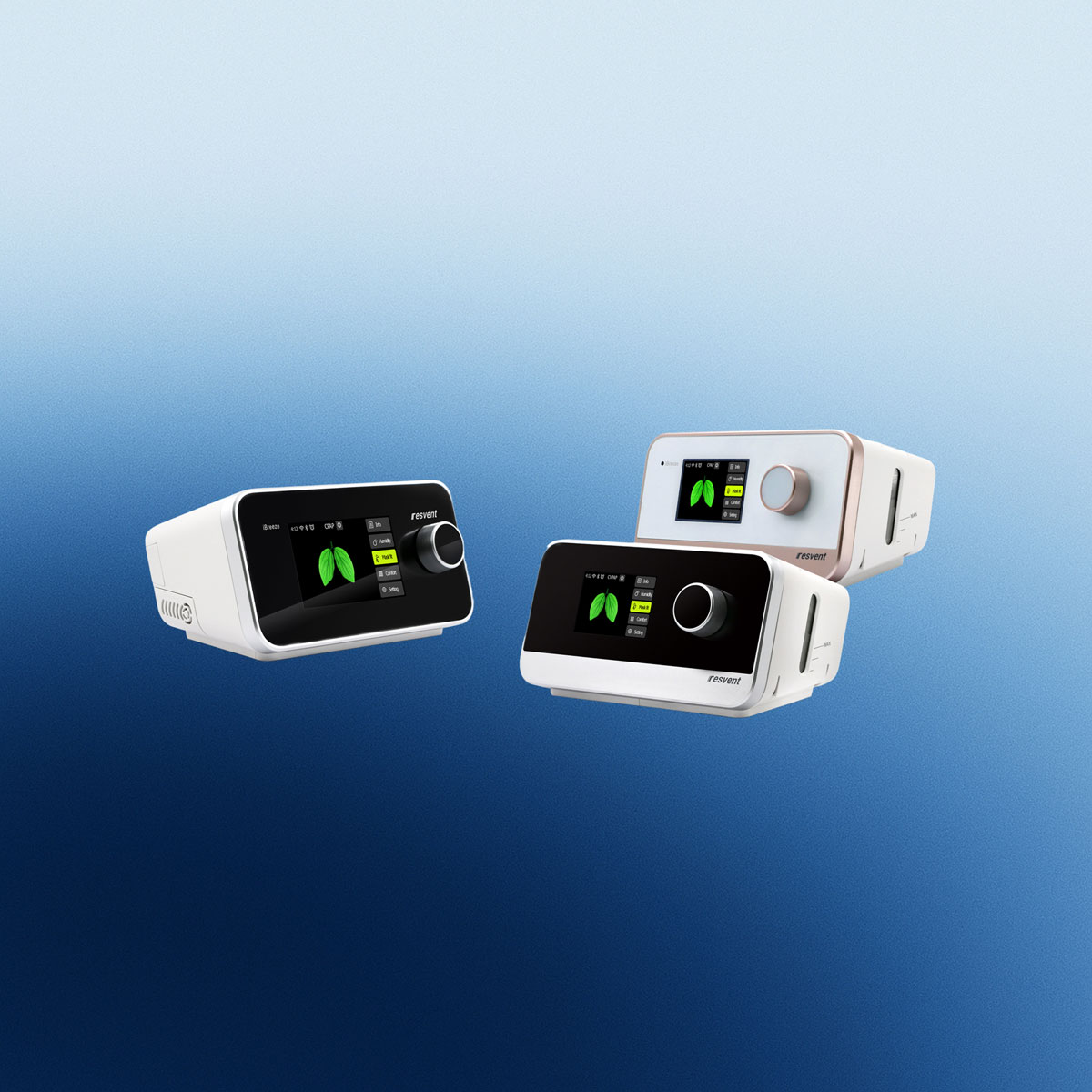
- The Resvent iBreeze platform covers all three PAP modes (CPAP, APAP, BiPAP) with cloud connectivity via ResAssist, enabling adherence monitoring for entire fleets from one unified platform.
- BiPAP should not be assigned by default for comfort: it is a clinically indicated escalation when CPAP or APAP therapy fails, not a first-line purchasing decision.
What Are CPAP, BiPAP and APAP? Core Definitions
Positive airway pressure (PAP) therapy is the gold-standard treatment for obstructive sleep apnea (OSA) and other forms of sleep-disordered breathing. All PAP devices work on the same basic principle: they deliver pressurized air through a mask to keep the airway open during sleep, preventing the collapse that causes apnea events.
The difference between CPAP, BiPAP and APAP lies entirely in how they modulate air pressure delivery. Understanding these differences is essential for clinicians making therapy decisions and for institutional buyers procuring PAP device fleets for home care programs, hospitals and wholesale distribution.
CPAP: Continuous Positive Airway Pressure
CPAP (Continuous Positive Airway Pressure) delivers a fixed pressure level throughout the entire breathing cycle. The pressure is set by the treating physician based on a titration study, and the device holds that exact pressure during inhalation, during exhalation and between breaths.
CPAP is the first-line therapy for obstructive sleep apnea and the most widely prescribed PAP mode worldwide. It is simple, effective and well studied, with decades of clinical evidence supporting its efficacy in reducing the apnea-hypopnea index (AHI), improving oxygen saturation and lowering cardiovascular risk in OSA patients.
APAP: Automatic Positive Airway Pressure (Auto-CPAP)
APAP (Automatic Positive Airway Pressure), also called Auto-CPAP or AutoPAP, dynamically adjusts pressure within a physician-set range (for example, 5 to 15 cmH2O) based on real-time detection of breathing events. The device uses algorithms to detect flow limitation, snoring, apneas and hypopneas, then raises or lowers pressure breath by breath to deliver the minimum effective pressure at every moment.
APAP is increasingly preferred over fixed CPAP for starting therapy because it lowers average pressure, improves patient comfort and removes the need for an in-lab titration study: the device essentially self-titrates during home use.
BiPAP: Bilevel Positive Airway Pressure
BiPAP (Bilevel Positive Airway Pressure), sometimes written BPAP, delivers two distinct pressure levels: a higher pressure during inhalation (IPAP, Inspiratory Positive Airway Pressure) and a lower pressure during exhalation (EPAP, Expiratory Positive Airway Pressure). The difference between IPAP and EPAP is called pressure support.
BiPAP is not a first-line treatment for OSA. It is clinically indicated when CPAP or APAP therapy has failed or when the patient has a condition that requires ventilatory support beyond simple airway management, such as central sleep apnea, obesity hypoventilation syndrome (OHS), chronic obstructive pulmonary disease (COPD) overlap or neuromuscular respiratory weakness.
CPAP vs APAP: The Most Common Procurement Decision
For most institutional buyers, the main purchasing decision is between CPAP and APAP, not BiPAP. BiPAP serves a smaller patient population with more severe conditions and is usually prescribed after CPAP or APAP has failed. The CPAP vs APAP comparison drives the largest volume of procurement decisions.
Pressure Delivery: Fixed vs Adaptive
The fundamental difference is pressure modulation. CPAP stays fixed at one pressure, for example 10 cmH2O, and delivers it continuously. If the patient only needs 6 cmH2O during light non-REM sleep but requires 12 cmH2O during supine REM sleep, fixed CPAP undertreats at some moments and overtreats at others.
APAP solves this by monitoring airflow in real time and adjusting pressure to match the patient's changing needs throughout the night. The result is lower average pressure, fewer pressure-related complaints (aerophagia, mask leaks, claustrophobia) and equal or better AHI reduction compared with fixed CPAP.
Titration Requirements
Fixed CPAP requires a pressure prescription derived from an in-lab titration study or from a home sleep test followed by auto-titration. APAP can be prescribed with a pressure range (for example, 4 to 20 cmH2O) and self-titrates during use, making it faster to deploy and more practical for large-scale institutional programs, where scheduling individual titration studies creates bottlenecks.
Patient Comfort and Adherence
Multiple studies have shown that APAP improves adherence in the early phase of therapy compared with fixed CPAP. Patients report less discomfort from excessive pressure, fewer mask leak complaints and lower rates of aerophagia. For institutional programs measured on compliance metrics, such as those contracted with insurers or national health systems, the adherence advantage of APAP translates directly into better program outcomes.
Device Versatility for Procurement
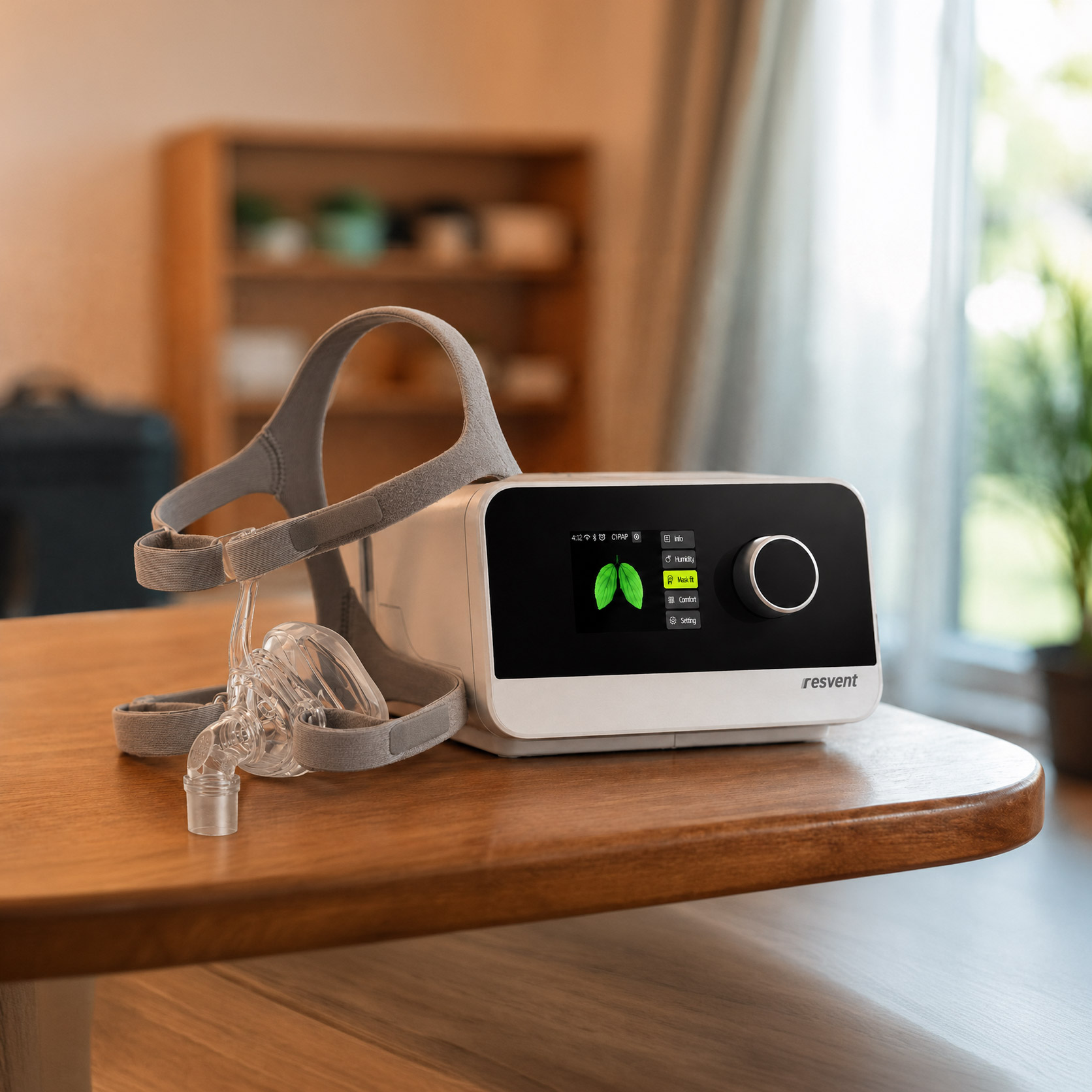
Most modern APAP devices, including the Resvent iBreeze CPAP/APAP, can operate in both CPAP mode (fixed pressure) and APAP mode (auto-adjusting). This means a single device SKU can serve patients who need either therapy mode. For institutional buyers, this reduces inventory complexity, simplifies purchasing and adds clinical flexibility without the need to keep separate CPAP and APAP stock.
When BiPAP Is Clinically Indicated
BiPAP is not an "upgraded CPAP": it is a different therapy modality for different clinical indications. Prescribing or procuring BiPAP when CPAP or APAP would be sufficient raises costs without improving outcomes. Understanding the correct indications prevents overbuying and ensures appropriate therapy allocation.
CPAP/APAP Pressure Intolerance
Patients who need high CPAP pressures (above 15 to 20 cmH2O) to control severe OSA often cannot tolerate constant high pressure during exhalation. BiPAP solves this by keeping a high IPAP for airway support while lowering EPAP to reduce the sensation of exhaling against pressure. The iBreeze BiPAP supports IPAP up to 25 cmH2O with independent EPAP settings for precise pressure support titration.
Central Sleep Apnea (CSA)
Unlike obstructive apnea (where the airway physically collapses), central apnea occurs when the brain stops sending the proper signals to drive breathing. CPAP holds the airway open, but it does not address the underlying failure of central respiratory drive. BiPAP with a backup respiratory rate (Timed or Spontaneous/Timed modes) can deliver mandatory breaths during central apnea events, maintaining ventilation when the patient's own drive fails.
Obesity Hypoventilation Syndrome (OHS)
Patients with OHS have chronic hypoventilation because excess body mass compresses the chest wall and diaphragm. They need active ventilatory support, not just an open airway. BiPAP's pressure support (the difference between IPAP and EPAP) increases tidal volume, improving both oxygenation and CO2 elimination.
COPD-OSA Overlap Syndrome
Patients with coexisting COPD and OSA need a therapy that addresses both airway obstruction and ventilatory insufficiency. BiPAP delivers the pressure support needed to increase ventilation while EPAP keeps the airway open. This is a growing population, particularly in LATAM markets where COPD prevalence is high.
Neuromuscular Respiratory Weakness
Conditions such as ALS, muscular dystrophy and post-polio syndrome progressively weaken the respiratory muscles. BiPAP compensates for reduced muscle strength by providing pressure support during inspiration, maintaining adequate tidal volume as the disease progresses.
Side-by-Side Comparison: CPAP vs BiPAP vs APAP
The following comparison summarizes the key technical and clinical differences among the three PAP modes:
Pressure delivery: CPAP uses a fixed pressure. APAP auto-adjusts within a set range. BiPAP delivers separate inspiratory and expiratory pressures.
Primary indication: CPAP and APAP treat obstructive sleep apnea. BiPAP treats complex sleep apnea, OHS, COPD overlap and neuromuscular conditions.
Titration requirement: CPAP requires a titration study or an empirical prescription. APAP self-titrates during home use. BiPAP requires specialist titration of the IPAP, EPAP and backup rate settings.
Patient comfort: CPAP delivers a fixed pressure that some patients find difficult during exhalation. APAP lowers average pressure, improving comfort. BiPAP offers the best exhalation comfort thanks to its lower EPAP.
Typical pressure range: CPAP operates at a fixed 4 to 20 cmH2O. APAP operates at 4 to 20 cmH2O, auto-adjusting. BiPAP operates at IPAP 4 to 25 cmH2O / EPAP 4 to 20 cmH2O.
Procurement cost: CPAP is the lowest. APAP is moderately higher. BiPAP has the highest cost per unit.
Prescription volume: CPAP and APAP together account for roughly 85 to 90% of PAP prescriptions. BiPAP accounts for 10 to 15%, mainly in complex cases or therapy escalation.
Procurement Strategy: How to Stock CPAP, APAP and BiPAP
For wholesale PAP device distributors, home care providers and hospital equipment managers, the stocking decision directly affects capital allocation, inventory turnover and patient coverage. Here is a procurement planning framework:
Core Inventory: APAP Devices (Dual-Mode CPAP/APAP)
Modern APAP devices that can operate in both fixed CPAP and auto-adjusting mode should be the primary procurement item. A single device SKU covers most prescriptions (both CPAP and APAP) while reducing warehouse complexity. The iBreeze CPAP/APAP is a dual-mode device that serves both therapy needs from a single platform.
Secondary Inventory: BiPAP Devices
BiPAP devices should make up 10 to 20% of total PAP inventory, in line with the clinical prevalence of the conditions that require BiPAP. The iBreeze BiPAP offers S, ST and T modes for full clinical flexibility across central apnea, OHS and neuromuscular disease populations.
The Connected Platform Advantage
Sourcing all PAP devices from a single manufacturer, such as the Resvent iBreeze platform, provides a significant operational advantage: unified cloud monitoring via ResAssist. Adherence data, leak reports, AHI trends and usage hours for the entire CPAP, APAP and BiPAP fleet are visible from a single dashboard. This simplifies fleet management, compliance reporting and proactive patient intervention for institutional programs managing hundreds or thousands of devices.
Mask Compatibility Across PAP Types
All three PAP modes use the same mask interfaces. The iRiFiT N300 nasal mask and the F300 full face mask are compatible with CPAP, APAP and BiPAP devices through standard 22 mm connectors. This means a single mask inventory serves the entire PAP device fleet, further simplifying procurement and reducing SKU count.
Common Myths About PAP Therapy Modes
"BiPAP Is Better Than CPAP"
False. BiPAP is different from CPAP, not better. For obstructive sleep apnea, CPAP and APAP are equally effective and are the recommended first-line therapies. BiPAP is only clinically indicated when CPAP or APAP is insufficient or when the patient has a condition that requires bilevel pressure support. Stocking BiPAP as a first-line device raises costs without clinical justification.
"APAP Is Just an Expensive CPAP"
Although APAP devices cost slightly more per unit, the total cost calculation favors APAP once you factor in: no titration study cost, better early adherence (fewer abandoned devices), dual-mode flexibility (one SKU instead of two) and fewer mask leak complaints caused by over-pressurization.
"All PAP Devices Are the Same"
Performance varies significantly across manufacturers. Key differentiators include noise level, auto-titration algorithm sensitivity, connectivity options, data reporting granularity, mask compatibility range and after-sales support availability. For institutional buyers in LATAM, the iBreeze platform's GSM/GPRS connectivity, noise level below 26 dB and ResAssist cloud integration are differentiators that matter at scale.
Which PAP Device for Which Patient? A Clinical Decision Framework
For clinicians and institutional buyers setting therapy allocation protocols, here is a simplified decision framework:
Start with APAP for: newly diagnosed OSA patients, patients who have not had an in-lab titration, patients with positional OSA or REM-related variability, and home care programs that require rapid deployment without individual titration.
Use fixed CPAP for: patients with a known optimal pressure from titration, patients who prefer a constant pressure without variation, and institutional programs with strict prescribing protocols that require fixed settings.
Escalate to BiPAP when: CPAP or APAP fails to bring the AHI below 5 events per hour, the patient cannot tolerate expiratory pressure above 15 cmH2O, the central apnea index exceeds treatment thresholds, the patient has diagnosed OHS, COPD overlap or neuromuscular respiratory disease, or the patient requires backup respiratory rate support.
Conclusion
Understanding the differences in CPAP vs BiPAP vs APAP is essential for making informed therapy and procurement decisions. For institutional buyers across Latin America (distributors, home care providers, hospital systems and industrial gas companies), the optimal strategy is to standardize on a dual-mode APAP platform (covering both CPAP and APAP prescriptions) with BiPAP available for escalated clinical needs.
The Resvent iBreeze CPAP/APAP and the iBreeze BiPAP together cover the full clinical spectrum from a single manufacturer's platform, with unified cloud monitoring via ResAssist, universal mask compatibility with the iRiFiT mask line, and the operational simplicity institutional buyers need at scale.
Request wholesale pricing for the complete iBreeze PAP platform or explore the full catalog of sleep therapy devices.
References
- American Academy of Sleep Medicine: Clinical Practice Guideline for the Treatment of Central Sleep Apnea in Adults (2025)
- National Heart, Lung, and Blood Institute: CPAP Therapy Overview
- U.S. Food and Drug Administration: Respiratory Devices Information
- Patil SP, et al. Treatment of Adult Obstructive Sleep Apnea with Positive Airway Pressure: An American Academy of Sleep Medicine Clinical Practice Guideline. Journal of Clinical Sleep Medicine.
- Bloch KE, et al. Autoadjusting Versus Fixed CPAP for Obstructive Sleep Apnoea: A Multicentre Randomised Equivalence Trial. Thorax.
- Berry RB, et al. Best Clinical Practices for the Sleep Center Adjustment of Noninvasive Positive Pressure Ventilation (NPPV) in Stable Chronic Alveolar Hypoventilation Syndromes. JCSM.