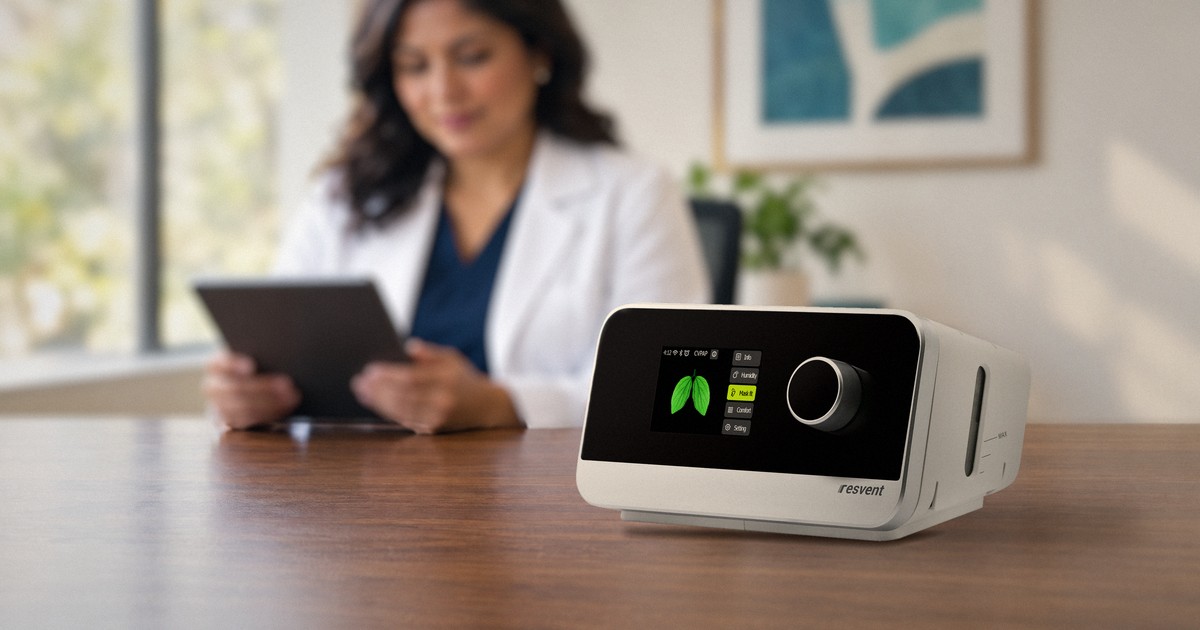
BiPAP Settings Explained: IPAP, EPAP, Backup Rate and Modes
BiPAP settings explained: IPAP, EPAP, pressure support, backup rate, rise time, inspiratory time and S, ST, T and volume-assured modes.

Key Takeaways
- IPAP is the inhalation pressure and EPAP the exhalation pressure; their difference, pressure support, assists each breath.
- A setting written as 10/5 means IPAP 10 and EPAP 5 cmH₂O; real values are prescribed individually after titration.
- ST and T modes add a backup rate and set inspiratory time for patients whose breathing can pause, such as in central sleep apnea.
- Rise time and Ti min/max fine-tune comfort and synchrony; volume-assured modes adjust pressure toward a target tidal volume.
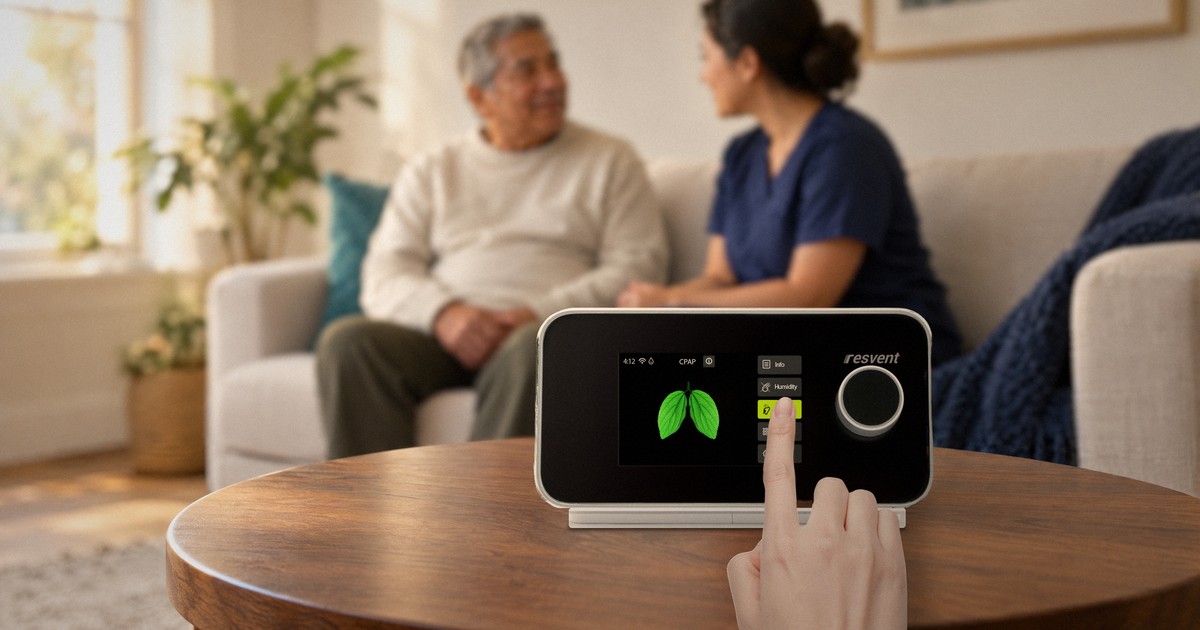
- The iBreeze BPAP offers S, ST, T and CPAP modes, IPAP 4 to 30 cmH₂O, EPAP 4 to 25 cmH₂O and EVAPS.
BiPAP settings are the values a clinician prescribes to control a bilevel positive airway pressure device. The two core settings are IPAP, the higher pressure delivered while the patient breathes in, and EPAP, the lower pressure held while the patient breathes out; the gap between them is the pressure support that assists each breath. Depending on the mode, the prescription can also include a backup breathing rate, rise time and inspiratory time limits. All of these are set and adjusted by the treating clinician, typically during a titration study, never by the patient.
This guide explains what each setting does, how the S, ST, T and CPAP modes differ and how volume-assured modes work, using the iBreeze BPAP as a reference device. If you are new to bilevel therapy, start with what a BiPAP machine is and who it is for.
How to read BiPAP settings
BiPAP pressures are usually written as two numbers, IPAP over EPAP, in centimeters of water (cmH₂O). A prescription written as "10/5" means an IPAP of 10 cmH₂O and an EPAP of 5 cmH₂O, which gives a pressure support of 5 cmH₂O. That example only illustrates the notation. It is not a typical or recommended setting, because the right values depend entirely on the patient's condition and titration results.
IPAP, EPAP and pressure support
IPAP (inspiratory positive airway pressure)
IPAP is the pressure delivered during inhalation. Together with EPAP it determines how much the device helps move air into the lungs. On the iBreeze BPAP, IPAP can be set from 4 to 30 cmH₂O.
EPAP (expiratory positive airway pressure)
EPAP is the pressure held during exhalation. Its main job is to keep the upper airway open, the same role a single CPAP pressure plays in obstructive sleep apnea. On the iBreeze BPAP, EPAP can be set from 4 to 25 cmH₂O.
Pressure support
Pressure support is IPAP minus EPAP. The AASM's best-practice recommendations for noninvasive ventilation put it simply: IPAP and EPAP are adjusted to keep the upper airway open, and the pressure support augments ventilation. A larger pressure support generally means more assistance with each breath. For context, the AASM titration guidelines describe a pressure support of 4 to 10 cmH₂O when patients with obstructive sleep apnea are titrated on bilevel therapy, and a recommended maximum IPAP of 30 cmH₂O for patients 12 and older. Where a given patient lands within those limits is decided during titration.
Timing settings: backup rate, rise time and inspiratory time
Backup rate
The backup rate, in breaths per minute, is the minimum number of breaths the device guarantees in ST and T modes. If the patient does not start a breath within the time window the rate defines, the device delivers one. It is central for patients whose drive to breathe can fail during sleep: the AASM's 2025 guideline on central sleep apnea suggests bilevel PAP with a backup rate for several forms of central sleep apnea and suggests against bilevel PAP without one.
Rise time
Rise time controls how quickly pressure climbs from EPAP to IPAP at the start of each breath. A faster rise delivers air sooner; a slower rise feels gentler. It is mainly a comfort and synchrony setting, and the AASM recommendations list it, together with pressure relief and minimum and maximum IPAP duration, among the parameters clinicians may adjust to improve comfort and patient-device synchrony.
Inspiratory time (Ti min and Ti max)
Inspiratory time is how long IPAP is delivered. In T mode, and for machine-triggered breaths in ST mode, the clinician sets the inspiratory time. On devices that offer Ti min and Ti max, these limits keep spontaneous breaths from ending too early or lasting too long, which also helps synchrony. The timing parameters available differ between devices, so the device's clinical manual is the reference for what can be set.
Trigger sensitivity
Trigger sensitivity determines how readily the device detects the start of the patient's breath and switches to IPAP. If it is too insensitive, the patient works harder to start a breath; if it is too sensitive, the device may trigger on its own. The iBreeze BPAP has adjustable trigger sensitivity and synchronizes with the patient's breathing in as little as 0.1 seconds.
BiPAP modes: S, ST, T and CPAP
| Mode | Who starts the breath | Main settings | Where guidelines describe its use |
|---|---|---|---|
| S (spontaneous) | Always the patient | IPAP, EPAP, rise time, trigger | Patients with a reliable drive to breathe who need pressure support |
| ST (spontaneous-timed) | The patient, with a machine breath if none occurs in time | IPAP, EPAP, backup rate, inspiratory time | Central sleep apnea and hypoventilation, where breathing can pause |
| T (timed) | The machine, at a set rate and inspiratory time | IPAP, EPAP, rate, inspiratory time | Patients with little or unreliable spontaneous effort |
| CPAP | The patient, with one constant pressure | Single pressure | Obstructive sleep apnea when bilevel support is not needed |
The AASM recommendations for noninvasive ventilation define the three bilevel modes the same way: in S mode the patient cycles the device between EPAP and IPAP, in ST mode a backup rate delivers IPAP for the set inspiratory time if the patient does not trigger within a set window, and in T mode the inspiratory time and rate are fixed. The iBreeze BPAP supports all four modes, so a clinician can change the mode as a patient's condition evolves without changing hardware.
Volume-assured pressure support
Standard bilevel therapy delivers fixed pressures, so the volume of each breath can fall when the patient's effort drops, for example in deeper sleep or as a disease progresses. Volume-assured pressure support modes address this: the clinician sets a target tidal volume (the volume of air per breath) along with pressure limits, and the device adjusts pressure support within those limits to reach the target. Manufacturers use different names for these modes. On the iBreeze BPAP it is EVAPS (Essential Volume Assured Pressure Support), which automatically adjusts pressure to deliver the clinician-set target tidal volume.
Volume-assured modes are used for patients with hypoventilation or variable respiratory insufficiency, such as obesity hypoventilation syndrome, neuromuscular disease or COPD overlap, under specialist supervision. Choosing one is a prescribing decision, not a comfort option.
How clinicians set and adjust BiPAP
The AASM recommends attended titration with polysomnography to identify effective noninvasive ventilation settings for patients with chronic hypoventilation, adjusting pressures, backup rate and inspiratory time during the study. When therapy is started in an outpatient setting based on clinical judgment, the same recommendations advise confirming the final settings with a sleep study when possible, followed by close follow-up.
Follow-up relies heavily on device data. Through the ResAssist™ cloud platform, the iBreeze BPAP reports IPAP and EPAP delivery, tidal volume trends, AHI, usage hours and leak, and clinicians can adjust pressures and modes remotely when they decide it is needed.
For routine obstructive sleep apnea, the AASM suggests CPAP or APAP over bilevel therapy, so BiPAP is generally reserved for patients who need ventilatory support or who cannot tolerate CPAP. Our CPAP pressure settings guide covers the single-pressure side, and what is an APAP machine explains auto-adjusting CPAP.
Signs to discuss with the care team
- Bloating or swallowing air (aerophagia), a recognized side effect of positive airway pressure therapy.
- Breaths that feel too early, too late or cut short, which can point to trigger, rise time or timing settings.
- Large mask leak, dryness or mouth breathing; a full face mask such as the iRiFiT F300 is often used when patients breathe through the mouth.
- Returning symptoms such as morning headaches, daytime sleepiness or breathlessness.
Patients and caregivers should report these to the prescribing clinician or homecare provider and should not change settings themselves.
Sourcing bilevel devices
Hospitals, homecare providers and distributors evaluating bilevel equipment should compare the modes, pressure ranges, volume-assured options and remote data each device offers. The iBreeze BPAP combines S, ST, T and CPAP modes, IPAP up to 30 cmH₂O, EVAPS, an integrated heated humidifier with 8 levels, a 5-inch touchscreen and ResAssist™ connectivity in one unit, and it shares accessories and the cloud platform with the iBreeze CPAP/APAP. See the full sleep therapy device line and request a wholesale quote from SysMed USA.
References
- Berry RB, Chediak A, Brown LK, et al. Best Clinical Practices for the Sleep Center Adjustment of Noninvasive Positive Pressure Ventilation (NPPV) in Stable Chronic Alveolar Hypoventilation Syndromes. J Clin Sleep Med. 2010;6(5):491-509.
- Kushida CA, et al. (Positive Airway Pressure Titration Task Force, American Academy of Sleep Medicine). Clinical Guidelines for the Manual Titration of Positive Airway Pressure in Patients with Obstructive Sleep Apnea. J Clin Sleep Med. 2008;4(2):157-171.
- Badr MS, et al. Treatment of central sleep apnea in adults: an American Academy of Sleep Medicine clinical practice guideline. J Clin Sleep Med. 2025;21(12):2181-2191
- Patil SP, Ayappa IA, Caples SM, Kimoff RJ, Patel SR, Harrod CG. Treatment of Adult Obstructive Sleep Apnea with Positive Airway Pressure: An American Academy of Sleep Medicine Clinical Practice Guideline. J Clin Sleep Med. 2019;15(2):335-343.
- MedlinePlus, U.S. National Library of Medicine: Positive airway pressure treatment
- Shepherd K, Hillman D, Eastwood P. Symptoms of Aerophagia Are Common in Patients on Continuous Positive Airway Pressure Therapy and Are Related to the Presence of Nighttime Gastroesophageal Reflux. J Clin Sleep Med. 2013;9(1):13-17.
Frequently Asked Questions
What are typical BiPAP settings?
BiPAP settings are prescribed and titrated by a clinician: they are not self-adjusted. The two core settings are IPAP (inspiratory positive airway pressure) and EPAP (expiratory positive airway pressure); the difference between them, called pressure support, determines how much the device assists each breath. Devices in ST (spontaneous-timed) mode add a backup respiratory rate that triggers a breath if the patient doesn't. The iBreeze BiPAP supports IPAP from 4 to 30 cmH₂O, EPAP from 4 to 25 cmH₂O, and EVAPS volume-assured pressure support that auto-adjusts to maintain a clinician-set tidal volume.
What does a BiPAP setting of 10/5 mean?
BiPAP settings are written as IPAP over EPAP in centimeters of water (cmH₂O). "10/5" means an IPAP of 10 cmH₂O while breathing in and an EPAP of 5 cmH₂O while breathing out. The difference, 5 cmH₂O, is the pressure support that assists each breath. The notation does not show the mode, backup rate or timing settings, which are also part of the prescription. The example only explains how to read the numbers; it is not a recommended setting, since each patient's values are determined by the treating clinician, usually through a titration study.
What is the difference between S, ST and T modes on a BiPAP?
The modes define who starts each breath. In S (spontaneous) mode the patient triggers every breath and the device switches between IPAP and EPAP in step. In ST (spontaneous-timed) mode the patient still triggers breaths, but if none occurs within the window set by the backup rate, the device delivers one. In T (timed) mode the device delivers breaths at a set rate and inspiratory time. ST and T are used when the drive to breathe can fail, as in central sleep apnea or hypoventilation. The iBreeze BPAP supports S, ST, T and CPAP modes; the clinician chooses the mode.
What is rise time on a BiPAP machine?
Rise time is how quickly pressure climbs from EPAP to IPAP at the beginning of each breath. A short rise time brings the device to full inspiratory pressure quickly, while a longer one makes the transition feel softer. It is mainly a comfort and synchrony setting: AASM recommendations for noninvasive ventilation list rise time, along with pressure relief and minimum and maximum inspiratory duration, among the parameters clinicians may adjust so the device keeps pace with the patient. Like other BiPAP settings, it is set by the clinician or homecare provider, and its availability and scale vary by device.