ResMed and Philips Alternatives: How to Compare CPAP Brands in 2026
How to compare CPAP brands beyond ResMed and Philips: what the 2021 Philips recall and 2024 consent decree mean, plus a checklist for any CPAP.


Key Takeaways
- Compare any CPAP brand on registration, therapy mode, data, noise, humidification and local support, not on the logo alone.
- In June 2021 Philips Respironics recalled certain CPAP, BiPAP and ventilator devices over PE-PUR foam breakdown; the FDA puts the total at 15 million devices.
- The April 2024 consent decree restricts new Philips CPAP sales in the US; Philips says it still supplies new devices outside the US.
- If you use a recalled device, do not stop therapy without talking to your health care provider, and register the serial number.
- The Resvent iBreeze line is one available option; compare it on the same criteria.
If you are looking beyond ResMed and Philips, compare CPAP brands on criteria you can verify rather than on the logo: valid registration with your country's regulator, the therapy mode your physician prescribed (CPAP, APAP or BPAP), how the device stores and sends data, its rated noise level, humidification, and local access to technical support, spare parts and masks. This guide summarizes what happened with the Philips Respironics recall and the 2024 consent decree, then gives a checklist you can apply to any CPAP brand, including ResMed, Philips and Resvent.
Why people look for ResMed and Philips alternatives
ResMed and Philips Respironics are the two names most people know, and in the United States the search "philips cpap recall" still draws about 2,300 searches a month (Ahrefs, October 2026). Behind those searches are three practical questions: what the 2021 Philips recall covered, whether devices and parts are available, and which other CPAP brands meet the same requirements.
For a hospital, clinic or homecare provider the question is narrower: which device can be bought with a valid registration, local support and a steady supply of parts for the years a patient stays on therapy.
What happened with the Philips Respironics recall (2021)
In June 2021 Philips Respironics recalled certain ventilators, CPAP machines and BiPAP machines in the United States; outside the US it issued a field safety notice. The cause was the polyester-based polyurethane (PE-PUR) foam used to reduce sound and vibration. According to the FDA, the foam can break down, and black particles or certain chemicals that are not visible could be inhaled or swallowed. The FDA says the recall affected 15 million devices worldwide.
Recalled models include devices made between 2009 and April 26, 2021, such as DreamStation, DreamStation Go, SystemOne (Q-Series), REMstar SE Auto, Dorma 400 and Dorma 500, plus several ventilators. Philips reports that more than 99% of actionable registered CPAP and BiPAP sleep therapy devices have been remediated globally.
If you use a recalled device
The FDA advises patients not to stop or change therapy on their own. Talk to your health care provider about whether to keep using the device, switch to another device or consider other treatment while you wait for a repaired or replacement unit. Find the serial number, register it on the Philips recall website or ask the supplier that provided the device, and do not use ozone or ultraviolet light cleaners.
The 2024 consent decree: what changed
On April 9, 2024, the U.S. District Court for the Western District of Pennsylvania entered a consent decree against Philips Respironics. According to the FDA, it restricts, with limited exceptions, the production and sale of new CPAP machines, BiPAP machines and other devices from several Philips Respironics facilities in the United States until certain requirements are met, and it requires a recall remediation plan for affected patients.
Philips states that the decree focuses on its US operations. In the US it continues to service devices already in use and to sell masks, consumables and replacement parts, but it will not sell new CPAP or BiPAP devices until the requirements are met. Outside the US, Philips says it continues to provide new sleep and respiratory care devices, accessories and service, subject to certain requirements.
How to compare any CPAP brand
These criteria apply to ResMed, Philips, Resvent or any other brand. None replaces your physician's judgment: CPAP, APAP and BPAP therapy require a prescription, and the prescribing clinician sets the mode and pressures.
Valid registration
A CPAP is a medical device. In the US, check the device's FDA status; in Latin America, ask for the sanitary registration issued by COFEPRIS in Mexico, INVIMA in Colombia, ISP in Chile or ANMAT in Argentina, and confirm it covers the exact model. Certifications such as CE marking and ISO 13485 support the file but do not replace local registration. See why FDA and CE certifications matter.
Therapy modes
The American Academy of Sleep Medicine (AASM) clinical practice guideline recommends either CPAP or APAP for ongoing treatment of obstructive sleep apnea in adults, and suggests CPAP or APAP over BPAP for routine treatment. Check that the device offers the prescribed mode; the differences are explained in CPAP vs BiPAP vs APAP.
Data and connectivity
Look at how the device records usage hours, the apnea-hypopnea index (AHI) and leaks: SD card, WiFi or a cellular modem. The same AASM guideline suggests telemonitoring-guided interventions during the first weeks of therapy, which is only possible when the device sends data. Ask which platform the manufacturer uses and who can access the information.
Noise level
Noise affects both the patient and a bed partner. Compare the dB(A) value stated on each manufacturer's specification sheet; figures without a spec sheet behind them are not comparable.
Humidification
The NHLBI lists congestion, runny nose, dry mouth and nosebleeds among possible CPAP side effects, and the AASM review found that humidification produces a clinically significant reduction in several of them. Check whether a heated humidifier is built in and whether the device supports heated tubing.
Local support and spare parts
Ask who handles warranty claims in your country, how long a repair takes, and whether filters, tubing and water chambers are stocked locally. The NHLBI notes that masks and tubing should be cleaned daily and replaced on schedule, so supplies are a recurring cost to plan for.
Mask availability
The mask drives much of the comfort and leak performance. Confirm the device uses the standard 22 mm connection and that nasal, full face and nasal pillow masks are available locally in several sizes. See our CPAP masks and the guide to the best CPAP mask for side sleepers.
CPAP comparison checklist
| Criterion | What to ask | Why it matters |
|---|---|---|
| Registration | What is the registration number for this exact model, and is it current? | Without local registration the device cannot be legally marketed. |
| Therapy modes | Does it offer the prescribed mode: CPAP, APAP or BPAP? | The physician sets the mode; the device has to deliver it. |
| Data and connectivity | SD card, WiFi or cellular? Which platform, and who has access? | Supports adherence follow-up and telemonitoring. |
| Noise level | What dB(A) value does the spec sheet state? | Affects the comfort of the patient and bed partner. |
| Humidification | Built-in heated humidifier? Heated tubing support? | Reduces side effects such as dryness and nasal congestion. |
| Support and parts | Who handles warranty locally? Are filters, tubing and water chambers stocked? | Keeps therapy from stopping over a missing part. |
| Masks | Standard 22 mm connection? Which types and sizes are available locally? | Mask fit drives comfort and leaks. |
Resvent iBreeze as one available option
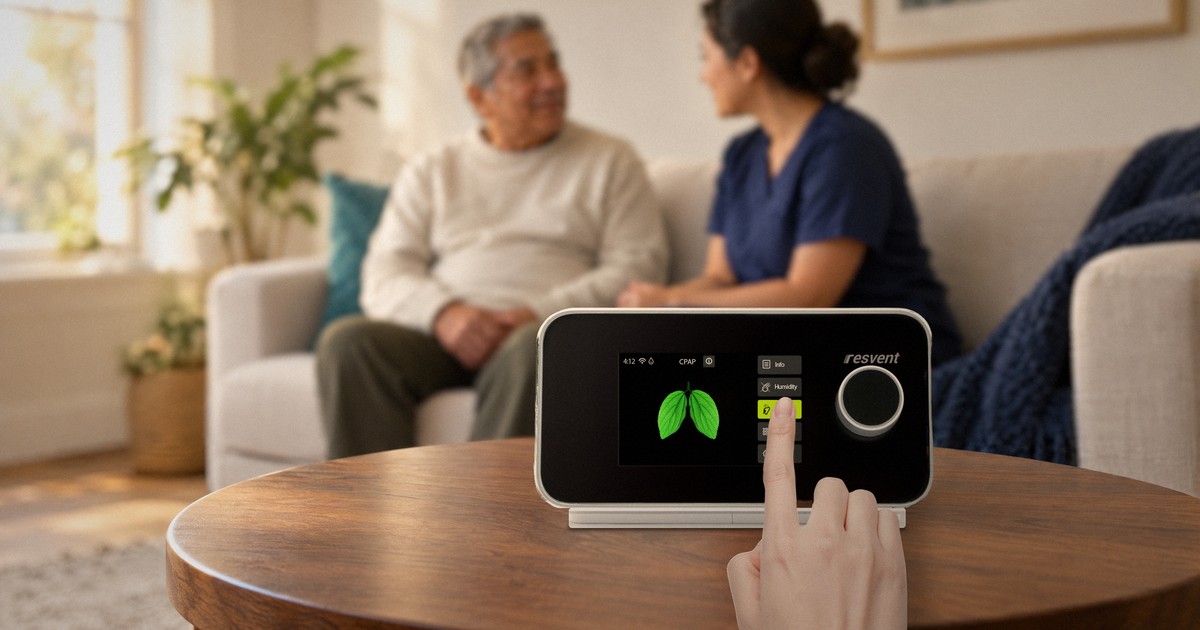
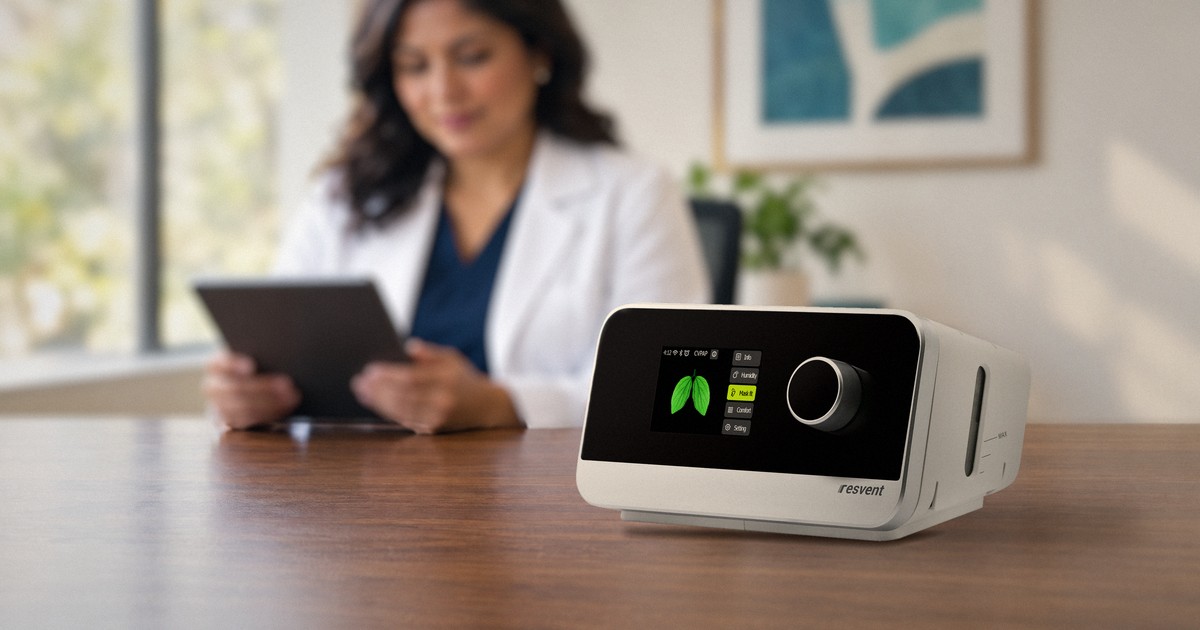
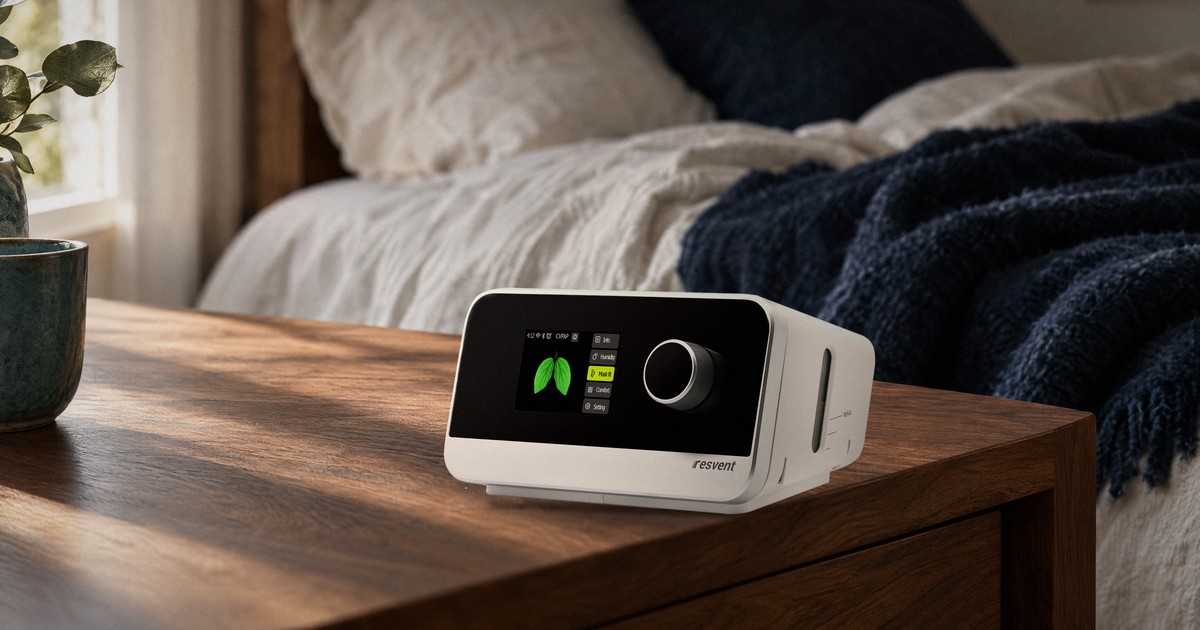
Resvent, a manufacturer based in Shenzhen, China, is one of the CPAP brands available in Latin America, and SysMed USA distributes its iBreeze line. These are the figures from its specification sheets, so you can compare them on the same criteria as any other brand:
- iBreeze CPAP/APAP: CPAP and APAP modes from 4 to 20 cmH₂O, integrated heated humidifier with 8 levels, SD card and optional WiFi or GSM/GPRS modules; rated sound level of 28 dB(A) or less.
- iBreeze III series: CPAP, CPAP Pro, APAP and APAP Pro versions, rated sound level of 25 dB or less and heated tubing support.
- iBreeze BPAP: S, ST, T and CPAP modes for patients whose clinician prescribes bilevel therapy.
- iBreeze+: travel CPAP/APAP of about 680 g with up to 12 hours of battery life.
iBreeze therapy data is managed in the ResAssist cloud platform, and the iBreeze CPAP/APAP and iBreeze+ received the Red Dot Award: Product Design 2026. As with any brand, confirm the model's registration in your country. Learn more on our Resvent CPAP page.
Wholesale supply for clinics, homecare providers and distributors
If you buy for a hospital, clinic, homecare provider or distributor in Latin America, SysMed USA can send specification sheets, regulatory documents and a wholesale quote for the iBreeze line, masks and accessories. Compare devices in our CPAP machines buying guide or request a wholesale quote.
References
- FDA: Recalled Philips Ventilators, BiPAP Machines, and CPAP Machines
- FDA: Federal Court Enters Consent Decree Against Philips Respironics (April 9, 2024)
- FDA: Recommendations for Recalled Philips Ventilators, BiPAP Machines, and CPAP Machines
- Philips: Philips Respironics reaches agreement with US government on a consent decree (April 10, 2024)
- Philips: June 2021 foam recall update
- Patil SP et al. Treatment of Adult Obstructive Sleep Apnea with Positive Airway Pressure: An AASM Clinical Practice Guideline. J Clin Sleep Med. 2019
- NHLBI, NIH: CPAP
Frequently Asked Questions
Which CPAP brand is best?
There is no single best CPAP brand. ResMed, Philips, Resvent and other manufacturers all make CPAP and APAP devices, and the right choice is the model that delivers the prescribed therapy mode and fits the patient and the market. Compare valid registration in your country, therapy modes, data and connectivity, rated noise level, humidification, and local support, spare parts and masks.
The AASM guideline recommends CPAP or APAP for ongoing treatment of obstructive sleep apnea in adults; the prescribing clinician sets the mode and pressures. SysMed USA supplies the Resvent iBreeze CPAP/APAP and related models to buyers in Latin America.
What happened with the Philips Respironics CPAP recall?
In June 2021 Philips Respironics recalled certain ventilators, CPAP and BiPAP machines (a field safety notice outside the US) because the PE-PUR sound abatement foam could break down and particles or chemicals could be inhaled or swallowed. The FDA says the recall affected 15 million devices worldwide, including DreamStation, DreamStation Go and SystemOne models made between 2009 and April 26, 2021.
On April 9, 2024, a US federal court entered a consent decree that restricts, with limited exceptions, the sale of new Philips Respironics CPAP and BiPAP devices from its US facilities until certain requirements are met. Philips reports that more than 99% of actionable registered sleep therapy devices have been remediated.
Does Philips still sell CPAP machines in Latin America?
The 2024 consent decree focuses on Philips Respironics' US operations. In the United States, Philips continues to service devices in use and to sell masks, consumables and replacement parts, but will not sell new CPAP or BiPAP devices until the decree's requirements are met. Outside the US, Philips states that it continues to provide new sleep and respiratory care devices, accessories and service, subject to certain requirements.
In Latin America, availability depends on each country and distributor, so confirm the model and its sanitary registration (COFEPRIS, INVIMA, ISP or ANMAT) with your local supplier before buying.
What should I do if my Philips CPAP was recalled?
The FDA advises patients not to stop or change therapy on their own. Talk to your health care provider about whether to keep using the device, switch to a device that is not part of the recall, or consider other treatment while you wait for a repaired or replacement unit.
Find the device's serial number and register it on the Philips recall website, or ask the medical equipment supplier that provided it to check whether it was recalled. Follow Philips' cleaning instructions and do not use ozone or ultraviolet light cleaners.
What sanitary registration does a CPAP need to be imported into Mexico or Colombia?
Each country regulates CPAP machines as medical devices through its health authority: COFEPRIS in Mexico, INVIMA in Colombia, ISP in Chile, ANMAT in Argentina and DIGEMID in Peru. In Mexico and Colombia the device needs a valid sanitary registration (registro sanitario) before it is marketed, and imports must be covered by that registration.
The dossier relies on the manufacturer's documentation, such as CE marking and ISO 13485 certificates. SysMed USA provides regulatory documentation support for country specific import and registration requirements. See why FDA and CE certifications matter.