COFEPRIS Medical Device Registration: Latin America Guide 2026
How medical device registration works in Mexico (COFEPRIS), Colombia, Chile, Argentina and four more markets, and how FDA and CE approvals support it.


Key Takeaways
- Registration is local: each country authorizes devices itself, and a local company holds the registration, not the foreign manufacturer.
- Mexico: COFEPRIS registro sanitario for classes I to III, valid 5 years, with 10-year extensions and a reliance route of up to 30 business days.
- Chile changed in 2026: CPAP/BPAP devices move to mandatory ISP registration after a 36-month phase-in.
- FDA 510(k) and CE marking are supporting evidence and open reliance routes; they do not replace local registration.
- Agree on the holder: define who holds, renews and reports on each registration before the first shipment.
Updated October 2026.
To sell or import a medical device in Mexico, the product needs a registro sanitario (sanitary registration) from COFEPRIS, filed by a company with a legal representative established in Mexico. Most of Latin America works the same way: a national regulator authorizes each device before it reaches hospitals, clinics or homecare patients, and a local company holds the registration, not the foreign manufacturer. FDA 510(k) clearance and CE marking do not replace these registrations, but they are key supporting evidence and can open faster reliance routes. This guide covers Mexico, Colombia, Chile and Argentina in detail, plus Costa Rica, Ecuador, Panama and Uruguay.
What a medical device registration is and who holds it
A medical device registration is the regulator's authorization to import, distribute or sell a specific device in its country. The regulator reviews a technical file (what the device is, how it is labeled, how it is made and under which quality system) and issues a registration tied to a product, a manufacturer and a holder.
The holder, called the titular del registro in Spanish, is the company that answers to the regulator for that product. It files the application, keeps the registration current and reports adverse events. Local presence is the rule: COFEPRIS asks for a notarized power of attorney in favor of a legal representative established in Mexico, Costa Rica asks foreign product owners to appoint a legal representative who lives in the country, and Argentina and Uruguay allow registration only by licensed local companies. In practice, the holder is usually the importer, a distributor or a specialized regulatory firm.
Mexico: the COFEPRIS registro sanitario
Article 376 of Mexico's Ley General de Salud requires a sanitary registration for medical devices, except low-risk devices that COFEPRIS lists as exempt. COFEPRIS publishes lists of low-risk devices that need registration and of those that do not, so check them before preparing a file. For local market notes, see our page on wholesale supply to Mexico.
Risk classes I, II and III
Article 83 of the Reglamento de Insumos para la Salud classifies devices by risk into Class I, II and III, and the COFEPRIS registration guide sets the documents for each class. An August 2025 simplification agreement cut the maximum official response times for the standard route to 20 business days for Class I, 25 for Class II and 35 for Class III, and to 15 business days for the low-risk procedure. These are legal maximums for a complete file: requests for corrections add time.
Reliance on reference regulators
Since July 2025, COFEPRIS has an abbreviated reliance route for registrations by equivalence with reference regulatory authorities. For medical devices it recognizes decisions of regulators that sit on the IMDRF Management Committee, a group that includes the US FDA, and good manufacturing practice certificates from full members of the Medical Device Single Audit Program (MDSAP). COFEPRIS has a maximum of 30 business days to resolve these applications. The August 2025 agreement also retired several older equivalence modalities, so confirm the current route with COFEPRIS before filing.
Validity and how to check a registration
A first registration is valid for 5 years. A January 2026 amendment to the Ley General de Salud allows extensions (prórrogas) of 10 years, and COFEPRIS reduced the resolution time for extensions to 45 calendar days. In August 2026 COFEPRIS launched a public viewer of medical device registrations, which buyers can use to confirm that the product, model and holder match before a purchase.
Colombia: INVIMA
Colombia regulates devices under Decreto 4725 of 2005, with four risk classes: I, IIa, IIb and III. Classes I and IIa receive an automatic sanitary registration, while classes IIb and III go through technical evaluation. INVIMA lists 2 business days for classes I and IIa and 90 business days for classes IIb and III, and registrations are valid for 10 years.
For imported devices, INVIMA asks for proof that the product is authorized in its country of origin or, if it is not sold there, a certificate of free sale from a reference country: the European Union, the United States, Canada, Japan or Australia. Importers also need a storage and conditioning capacity certificate (CCAA), and the manufacturer must authorize who imports the product or holds the registration. More on the market in our Colombia page.
Chile: ISP
Chile works differently. Under Decreto Supremo 825 of 1998, the Instituto de Salud Pública (ISP) registers only the devices placed under mandatory sanitary control by specific decrees, and ChileAtiende lists those registrations as valid for 3 years with automatic renewal. Devices outside those decrees have not needed an ISP registration.
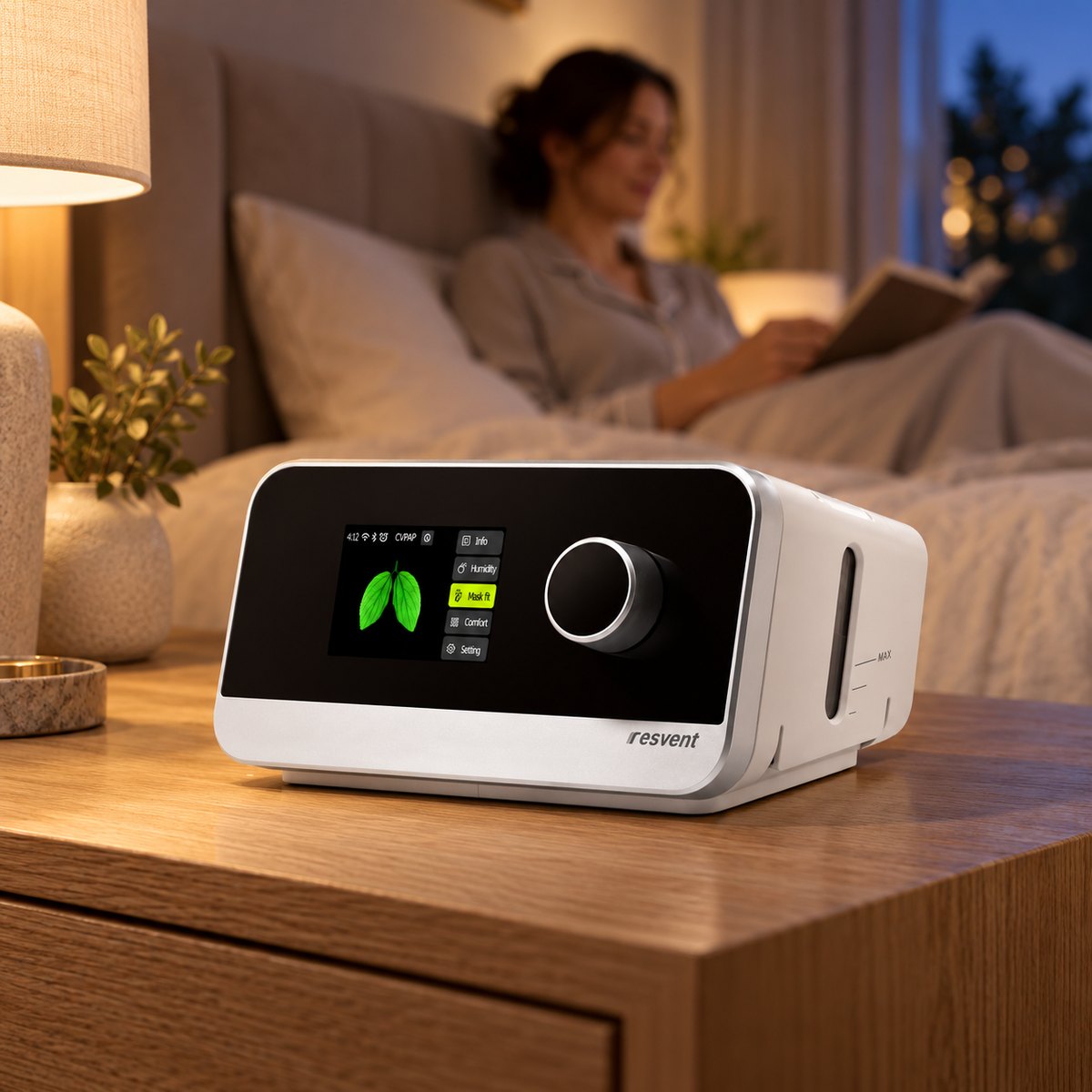
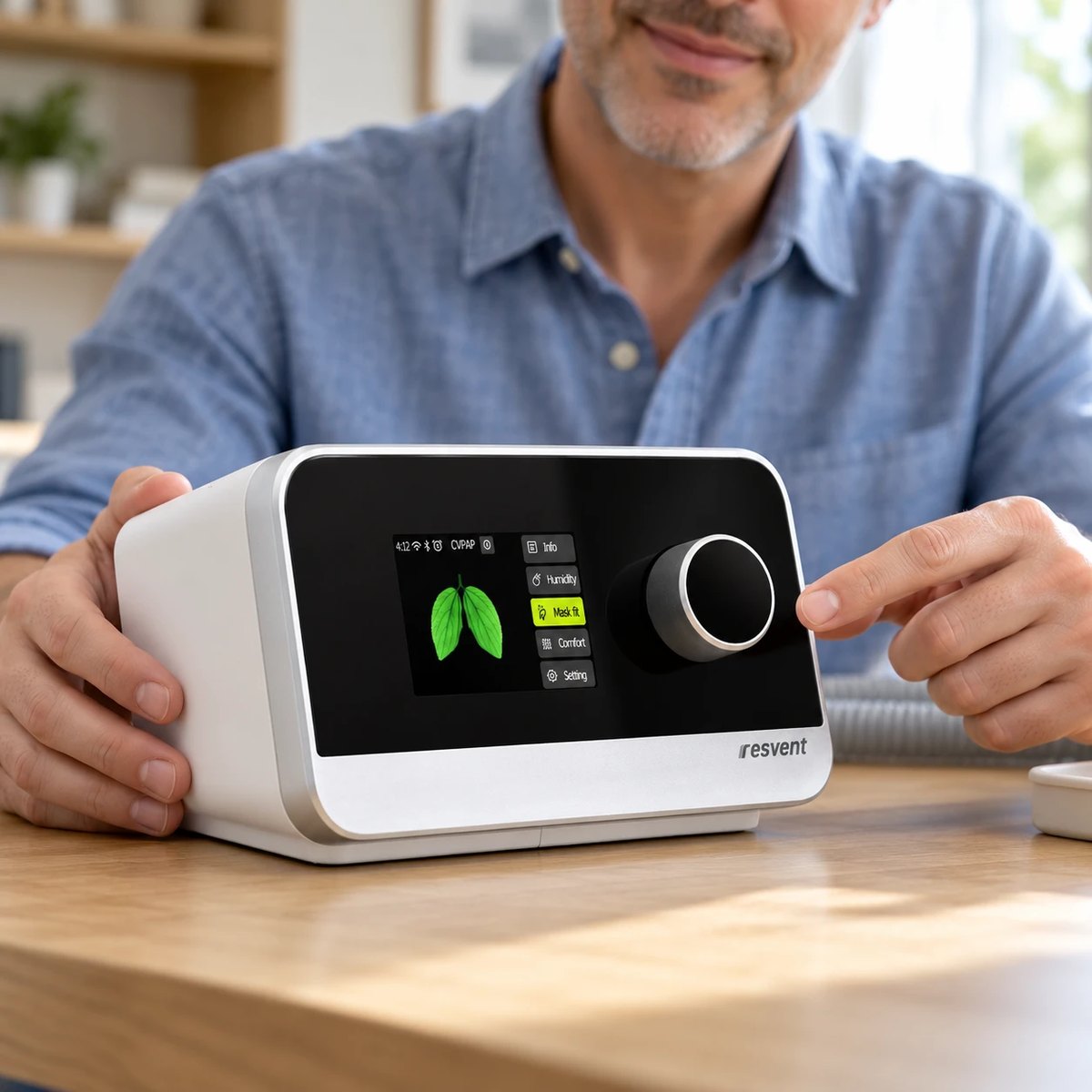
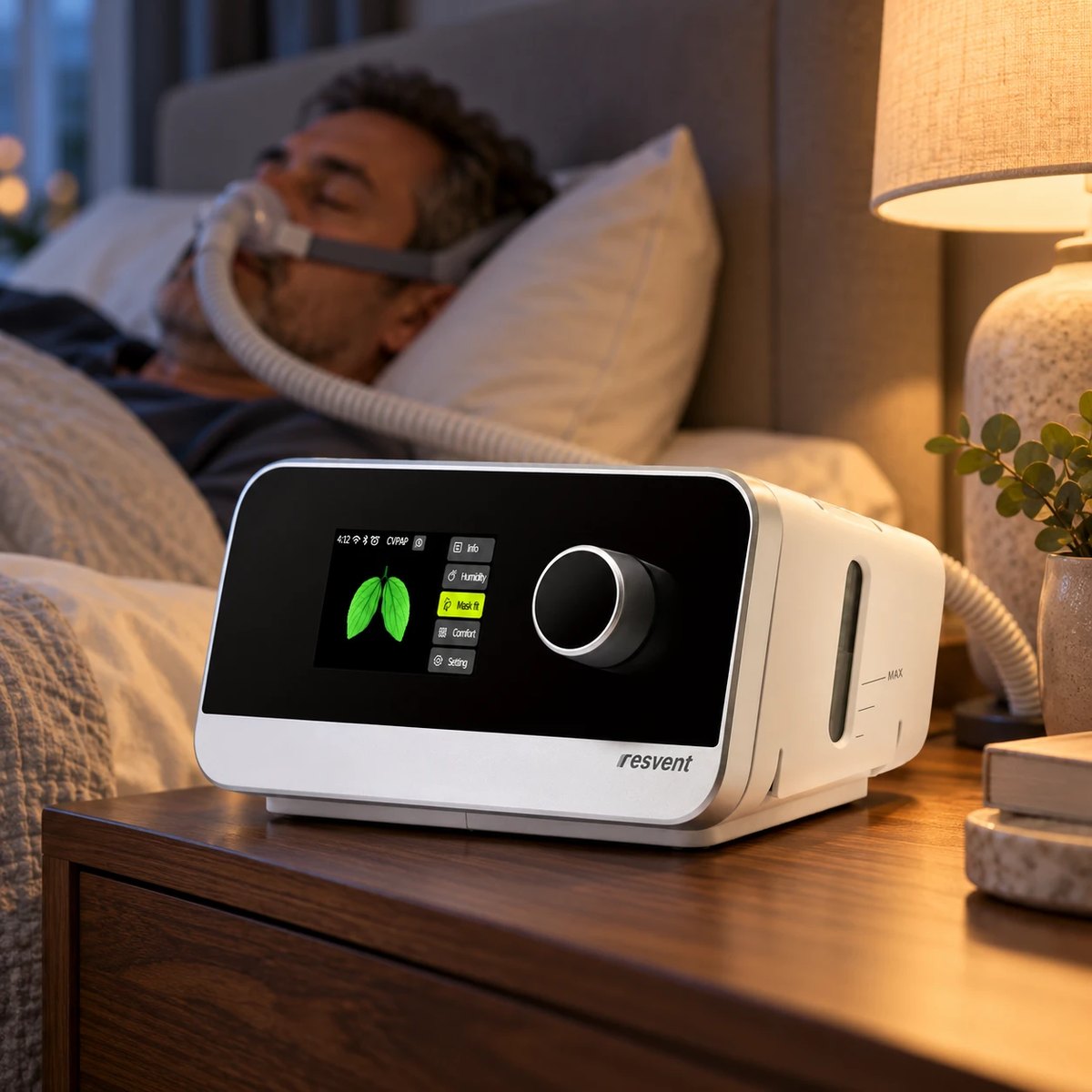
That is changing for respiratory equipment. Decreto Exento 25, published in the Diario Oficial on March 19, 2026, adds 39 device categories to mandatory control, including CPAP/BPAP devices (Class II) and mechanical ventilators (Class III), each with a 36-month phase-in. After that, these devices can only be imported or sold in Chile with an ISP sanitary registration, and importers may apply voluntarily once ISP issues the technical instruction. Oxygen concentrators and CPAP masks are not on the 2026 list. Distributors of CPAP machines such as the iBreeze CPAP/APAP and the iBreeze BPAP should plan their files now. See also our Chile page.
Argentina: ANMAT
In Argentina, ANMAT registers medical devices in its registry of medical technology producers and products (RPPTM). Disposición 9688/2019 uses four risk classes: classes I and II are registered through a declaration of conformity that ANMAT reviews within 15 business days, classes III and IV have a 110 business-day review, and registrations are valid for 5 years. In 2025, Disposición 64/2025 adopted the updated Mercosur technical regulation and repealed the older Disposición 2318/2002.
In February 2026, ANMAT simplified imports of class I and II devices: they are notified with a sworn statement, local tests are waived when the product is authorized in a listed high-surveillance country (the United States is on the list) and backed by a certificate of free sale, and only ANMAT-licensed companies may import and sell them. Market notes are on our Argentina page.
Costa Rica, Ecuador, Panama and Uruguay
Costa Rica
The Ministerio de Salud registers biomedical equipment and materials under Decreto 43902-S (technical regulation RTCR 505:2022), which replaced most of Decreto 34482-S in 2023. There are four classes, Class 1 can be sold without registration, and registrations are valid for 5 years. Foreign product owners must appoint a resident legal representative, and the rule lets the Ministry accept conformity results from recognized foreign registration systems with fewer documents. See our Costa Rica page.
Ecuador
ARCSA requires a sanitary registration for medical devices for human use, valid for 5 years under the current rule (ARCSA-DE-026-2016-YMIH), and offers a homologation route that recognizes registrations from high-surveillance authorities on the IMDRF Management Committee. A replacement rule, ARCSA-DE-2026-003-DASP, was signed in April 2026 and takes effect nine months later; it keeps the 5-year validity, uses classes I to IV and sets a 30 business-day simplified route. More on our Ecuador page.
Panama
Ley 90 of 2017, amended by Ley 92 of 2019, gives MINSA's Dirección Nacional de Dispositivos Médicos the power to issue sanitary registrations, introduced gradually by risk class starting with the highest. During the transition, technical criteria certificates (Certificados de Criterio Técnico) cover purchases by public institutions, and the law provides for validating registrations from high-standard regulators. In December 2025 MINSA opened a public consultation on a new implementing decree. See our Panama page.
Uruguay
Under Decreto 3/008, medical products must be registered with the Ministerio de Salud Pública by licensed companies. Registrations are valid for 5 years, and the file includes a certificate of free sale from the country of origin. More on our Uruguay page.
Comparison table: medical device registration by country
| Country | Regulator | Main rule | Risk classes | Validity | Key point |
|---|---|---|---|---|---|
| Mexico | COFEPRIS | Ley General de Salud art. 376; RIS art. 83 | I, II, III | 5 years, then 10-year extensions | Reliance route on IMDRF Management Committee regulators, up to 30 business days |
| Colombia | INVIMA | Decreto 4725/2005 | I, IIa, IIb, III | 10 years | Automatic registration for I and IIa; up to 90 business days for IIb and III |
| Chile | ISP | DS 825/1998; Decreto Exento 25/2026 | Set per decree (CPAP/BPAP Class II) | 3 years, automatic renewal | CPAP/BPAP enter mandatory registration after a 36-month phase-in |
| Argentina | ANMAT | Disposición 9688/2019; Disposición 64/2025 | I, II, III, IV | 5 years | Simplified imports of class I and II devices since February 2026 |
| Costa Rica | Ministerio de Salud | Decreto 43902-S (RTCR 505:2022) | 1, 2, 3, 4 | 5 years | Class 1 can be sold without registration |
| Ecuador | ARCSA | ARCSA-DE-026-2016-YMIH | I to IV under the 2026 rule | 5 years | Homologation route; new rule signed in April 2026 |
| Panama | MINSA (DNDM) | Ley 90/2017; Ley 92/2019 | By risk, gradual rollout | Confirm with DNDM | Validation of registrations from high-standard regulators |
| Uruguay | MSP | Decreto 3/008 | Confirm with MSP | 5 years | Registration only by licensed companies |
Documents typically required
Requirements vary by country and class, but most files are built from the same manufacturer and exporter documents. The COFEPRIS checklist for imported devices is a good reference:
- Application form and proof of payment of fees.
- Certificate of free sale from the country of origin and, when the applicant is not the manufacturer, a letter of representation from the manufacturer. For US exports, the FDA issues a Certificate to Foreign Government for devices that can be legally marketed in the United States.
- Draft label and instructions for use in Spanish.
- Technical information: description, intended use, specifications and evidence of compliance with applicable standards.
- Proof of good manufacturing practices. COFEPRIS accepts a current ISO 13485 certificate or an EU CE certificate as equivalents.
- Notarized power of attorney for the local legal representative.
One detail saves time in Mexico: COFEPRIS asks that a certificate of free sale without a stated expiry date be no more than 30 months old.
How FDA 510(k) and CE marking are used
A 510(k) is a premarket submission to the FDA showing that a device is substantially equivalent to a legally marketed device. CE marking shows that a product has been assessed against EU requirements, and since May 2021 medical devices in the EU follow Regulation (EU) 2017/745. Neither one is a Latin American registration. Their value is as evidence:
- They support the certificate of free sale or the proof of authorization in the country of origin that INVIMA, the MSP and other regulators ask for.
- CE and ISO 13485 certificates can prove good manufacturing practices; COFEPRIS accepts both.
- Approvals from reference regulators unlock reliance routes: COFEPRIS's equivalence pathway, ARCSA's homologation, Panama's validation of high-standard registrations, Costa Rica's recognition of foreign systems and Argentina's waiver of local tests. PAHO encourages regulatory reliance across the Americas.
Always check scope: the reference approval should cover the same model, intended use and manufacturer that appear in your file. For the procurement side, read why FDA and CE certifications matter when sourcing CPAP machines.
The role of the local importer or registration holder
Because the holder answers to the regulator, choosing it is a commercial decision as much as a regulatory one. A distributor that holds the registration controls who can import the product. Some manufacturers prefer an independent holder so they can change distributors without transferring the registration. Before the first shipment, agree in writing who holds each registration, who pays renewals and modifications, who handles adverse event reports (tecnovigilancia) and what happens to the registration if the distribution agreement ends.
Hospitals and public tenders usually ask for a copy of the current registration, so keep the certificate, its holder and its expiry date ready for every model you sell.
How SysMed USA supports distributors
SysMed USA is a wholesale distributor, not a regulator or a registration consultancy. We supply the documents your regulatory team uses to prepare or update a file: technical specifications, CE and ISO 13485 certificates as listed on each product page, user manuals in English and Spanish, and the registration documents we keep on file. Our product pages for the OT-Star 10 and O2 Tiger M50 oxygen concentrators and for the iBreeze devices note regulatory documentation support for Latin American imports, and our About page lists COFEPRIS documents for the M Series and OT Series and an INVIMA document. Ask for current copies, holders and validity dates for your country.
Planning to import CPAP, BiPAP or oxygen concentrators into Mexico, Colombia, Chile or Argentina? Request a wholesale quote and tell us your destination country. Our team replies within one business day with pricing, availability and the documents for your market, for clinics, homecare providers and distributors alike.
This guide summarizes public rules as of October 2026 and is not legal advice. Confirm requirements with the regulator or a local regulatory professional before filing.
References
- COFEPRIS. Guía para la obtención del registro sanitario de dispositivos médicos clase I, II, III y software como dispositivo médico.
- Diario Oficial de la Federación (18 Jul 2025). Lineamientos generales para la vía regulatoria abreviada por equivalencia con autoridades regulatorias de referencia.
- Diario Oficial de la Federación (22 Aug 2025). Acuerdo de simplificación de trámites ante la COFEPRIS.
- INVIMA. Dispositivos médicos y equipos biomédicos.
- Diario Oficial de Chile (19 Mar 2026). Decreto Exento 25, dispositivos médicos sujetos a control sanitario.
- ANMAT. Disposición 9688/2019, registro de productos médicos (texto actualizado).
- U.S. Food and Drug Administration. Premarket Notification 510(k).
- European Commission. CE marking.
Frequently Asked Questions
What sanitary registration does a CPAP need to be imported into Mexico or Colombia?
Each country regulates CPAP machines as medical devices through its health authority: COFEPRIS in Mexico, INVIMA in Colombia, ISP in Chile, ANMAT in Argentina and DIGEMID in Peru. In Mexico and Colombia the device needs a valid sanitary registration (registro sanitario) before it is marketed, and imports must be covered by that registration.
The dossier relies on the manufacturer's documentation, such as CE marking and ISO 13485 certificates. SysMed USA provides regulatory documentation support for country specific import and registration requirements. See why FDA and CE certifications matter.
What is a registro sanitario for medical devices?
A registro sanitario (sanitary registration) is the authorization a national health regulator grants before a medical device can be imported, distributed or sold in its country. In Mexico it is issued by COFEPRIS; in Colombia by INVIMA; in Argentina by ANMAT; and in Chile by the ISP for devices under mandatory control. Each registration covers a specific product, manufacturer and holder, and it has a validity period: in Mexico, 5 years for the first registration, with extensions of 10 years. The holder is a local company that answers to the regulator for the product.
How can I check if a medical device has a COFEPRIS registration?
Since August 2026, COFEPRIS offers a public viewer of medical device sanitary registrations (Visor de Registros Sanitarios de Dispositivos Médicos) where you can look up the registrations it has granted. Before buying, compare the registration number, product name, model, manufacturer and holder shown in the viewer with the copy of the registration your supplier provides, and confirm that it is still valid. Hospitals and public tenders usually ask for a copy of the current registration, so distributors should keep one on file for every model they sell.
Does FDA clearance or CE marking replace medical device registration in Latin America?
No. FDA 510(k) clearance and CE marking allow marketing in the United States and the European Union, not in Latin America. Each country still requires its own registration, filed by a local holder. They are, however, strong supporting evidence: they back the certificate of free sale, CE and ISO 13485 certificates can prove good manufacturing practices, and approvals from reference regulators open faster reliance routes, such as COFEPRIS's equivalence pathway with a maximum of 30 business days. Always confirm that the reference approval covers the same model and intended use.