Sleep Apnea Treatment Options: From Diagnosis to CPAP and Beyond
Sleep apnea treatment options explained: CPAP, APAP and BiPAP, oral appliances, weight loss, positional therapy and surgery, plus symptoms and diagnosis.

Key Takeaways
- Main sleep apnea treatment options: CPAP or APAP, BiPAP, oral appliances, weight loss, positional therapy and surgery.
- Obstructive sleep apnea is the most common type; severity is graded by AHI: mild 5 to 14, moderate 15 to 29, severe 30 or more.
- Diagnosis needs a sleep test: polysomnography or a Type III home sleep test in uncomplicated adults.
- PAP therapy is first-line for moderate to severe OSA and always requires a prescription.
- Adherence drives results; a common benchmark is 4 hours a night on 70 % of nights.
The main sleep apnea treatment options are positive airway pressure therapy (CPAP, auto CPAP or BiPAP), custom oral appliances that move the lower jaw forward, weight loss and lifestyle changes, positional therapy, and surgery for selected cases. For moderate to severe obstructive sleep apnea, CPAP or auto CPAP is the first-line treatment. The right choice depends on the type and severity of apnea, symptoms, anatomy and patient preference, and it starts with a sleep study and a physician's diagnosis. Every PAP machine is a prescription device, and the clinician sets the therapy pressure.
Sleep apnea is common and often missed. A 2019 analysis estimated that 936 million adults aged 30 to 69 worldwide have mild to severe obstructive sleep apnea, and 425 million have moderate to severe disease. This guide covers symptoms, causes, types, diagnosis and every major treatment option, with a Latin American perspective on access.
What is sleep apnea?
An apnea is a pause in breathing that lasts at least 10 seconds. A hypopnea is a partial reduction in airflow that lowers blood oxygen or causes a brief arousal. Each event fragments sleep, even though the person rarely remembers it.
A sleep study counts events per hour of sleep. That number, the apnea-hypopnea index (AHI), grades severity in adults:
| Severity | AHI (events per hour) | Comment |
|---|---|---|
| None | Under 5 | Normal range in adults |
| Mild | 5 to 14 | The physician weighs symptoms and other conditions |
| Moderate | 15 to 29 | Treatment is usually recommended |
| Severe | 30 or more | Higher cardiovascular and sleepiness risk |
AHI is not the only factor. Specialists read it alongside symptoms, overnight oxygen levels and other medical conditions.
Sleep apnea symptoms
Many people find out because a bed partner notices loud snoring or pauses. Common symptoms include:
- Loud, habitual snoring, often with silences followed by a snort or gasp.
- Breathing pauses witnessed by someone else.
- Waking up choking or gasping.
- Getting up several times at night to urinate.
- Excessive daytime sleepiness, such as dozing off while reading, watching TV or driving.
- Morning headaches and dry mouth.
- Poor concentration, memory lapses, irritability or low mood.
Women may report less typical symptoms such as insomnia, fatigue or headaches. In children, sleep apnea can show up as snoring, mouth breathing, restless sleep and behavior or school problems. Snoring alone does not always mean sleep apnea, but snoring with pauses or daytime sleepiness deserves a medical evaluation.
Causes and risk factors
In obstructive sleep apnea, the throat muscles relax during sleep and the tongue, soft palate or tonsils block airflow. The body responds with a breathing effort and a brief arousal that reopens the airway, a cycle that can repeat hundreds of times a night.
- Excess weight, especially around the neck.
- Age and sex: risk rises with age, is higher in men and increases in women after menopause.
- Airway anatomy: large tonsils, a small or recessed jaw, a deviated septum or chronic nasal congestion.
- Alcohol, sedatives and smoking.
- Family history of sleep apnea.
- Related conditions such as high blood pressure, type 2 diabetes or heart failure.
Central sleep apnea has different triggers, including heart failure, stroke, opioid use and sleeping at high altitude.
Types of sleep apnea
| Type | What happens | Associated factors | Options a physician may prescribe |
|---|---|---|---|
| Obstructive (OSA) | The upper airway collapses while the body keeps trying to breathe | Obesity, anatomy, age, alcohol | CPAP or APAP, oral appliance, weight loss, positional therapy, surgery |
| Central (CSA) | The brain does not send the signal to breathe, so there is no breathing effort | Heart failure, stroke, opioids, altitude | Treat the cause; positive pressure, including bilevel devices with a backup rate; oxygen if prescribed |
| Mixed or complex | Both obstructive and central events, sometimes appearing when CPAP starts | Those of both types | Specialist adjustment of therapy; BiPAP in some cases |
Obstructive sleep apnea is by far the most common type. For bilevel therapy, read what a BiPAP machine is and who it is for.
Why treating sleep apnea matters
Each pause lowers oxygen levels and triggers a stress response that raises blood pressure and heart rate. Over years, untreated sleep apnea is associated with high blood pressure (including hard-to-control hypertension), atrial fibrillation and other arrhythmias, heart attack and heart failure, stroke, type 2 diabetes, and drowsy driving and workplace accidents. It also affects mood, memory and quality of life.
Effective treatment improves sleepiness and quality of life. The American Academy of Sleep Medicine (AASM) recommends positive airway pressure for adults with obstructive sleep apnea and excessive sleepiness, and suggests it for those with comorbid hypertension.
Diagnosis comes before treatment
Evaluation starts with a sleep history, questions for the bed partner, a sleepiness scale such as the Epworth scale and an exam of the neck, nose and throat. The AASM recommends against diagnosing sleep apnea with questionnaires alone, without a sleep test.
In-lab polysomnography
The patient spends a night in a sleep lab with a technologist. The study records brain waves, eye and muscle movements, airflow, breathing effort, oxygen, heart rhythm and body position. It is the reference standard, and the AASM prefers it over home testing for people with significant heart or lung disease, respiratory muscle weakness, hypoventilation, chronic opioid use, a history of stroke or severe insomnia, and when a home test is negative or inconclusive.
Home sleep apnea testing (Type III)
A portable recorder is worn in the patient's own bed and measures at least airflow, breathing effort and oximetry. The AASM accepts it for uncomplicated adults with signs of moderate to severe obstructive sleep apnea when a technically adequate device is used. Home testing shortens waiting lists and lowers cost, which matters in Latin American regions with few sleep labs.
One example of this device class is the iApneaMate S3, an AASM Type III recorder that captures nasal airflow, thoracic effort, SpO₂, pulse rate, body position and snoring. As with any test, ordering and interpreting it is the physician's role.
| Feature | Polysomnography (lab) | Home sleep test (Type III) |
|---|---|---|
| Where | Sleep lab, attended by a technologist | Patient's home |
| What it measures | Sleep (EEG), breathing, oxygen, heart, muscles and position | Airflow, breathing effort, oximetry and pulse; position and snoring on some devices |
| Strengths | Most complete; detects other sleep disorders | More accessible; natural sleep setting |
| Limitations | Cost, waiting time, unfamiliar setting | Does not measure sleep; a negative result may need polysomnography |
| Typical use | Complex cases or inconclusive home tests | Uncomplicated adults with suspected moderate to severe OSA |
Sleep apnea treatment options in detail
Positive airway pressure: CPAP, APAP and BiPAP
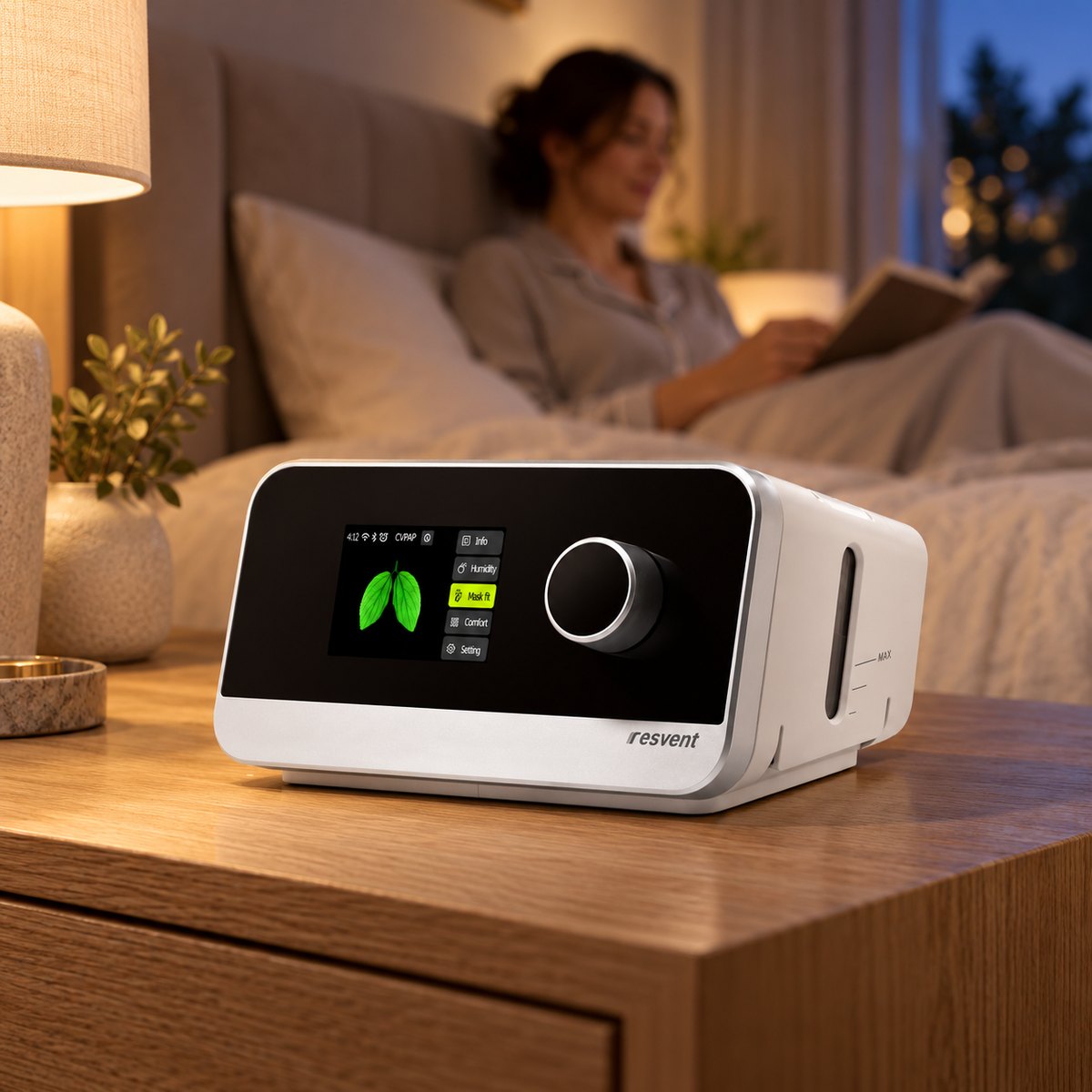
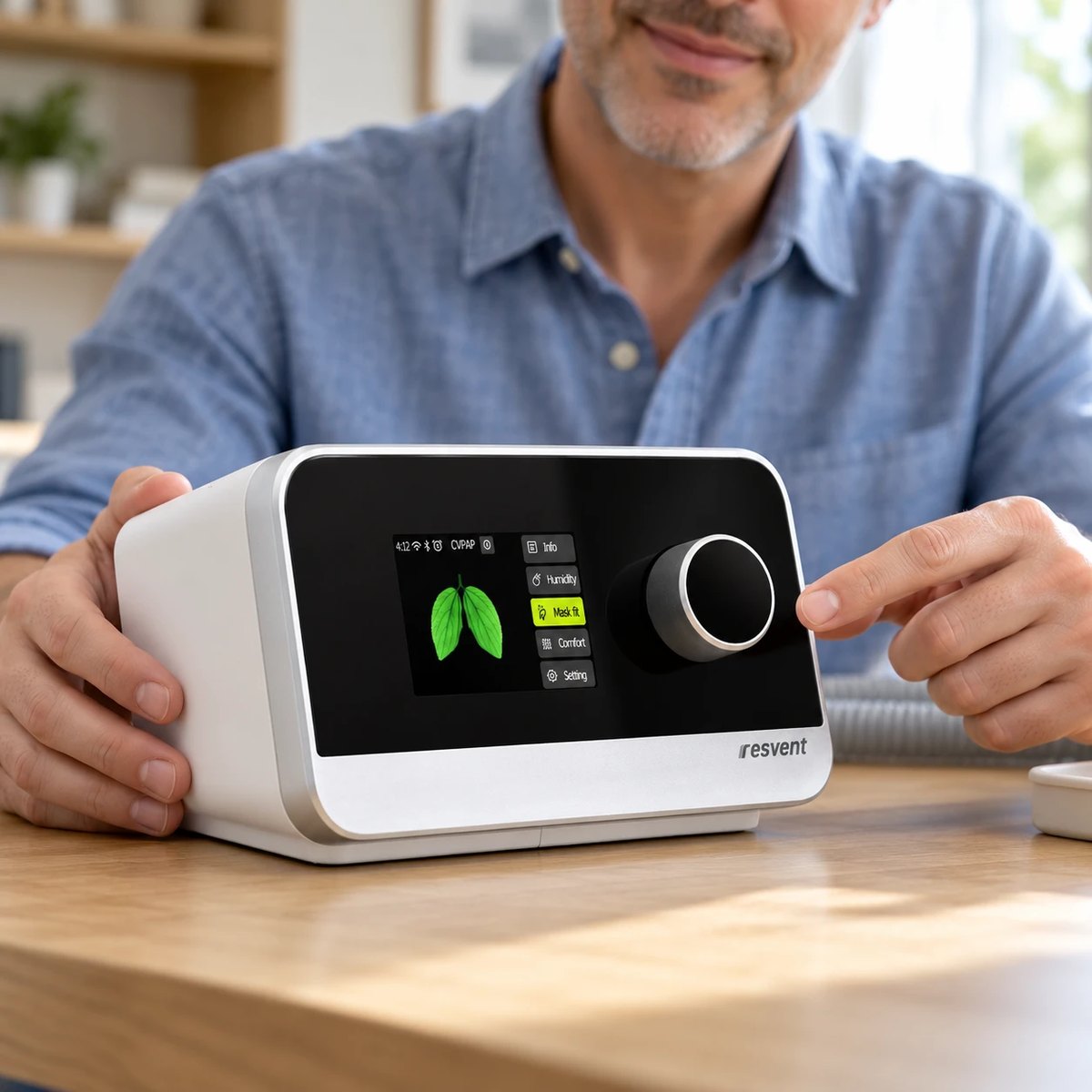
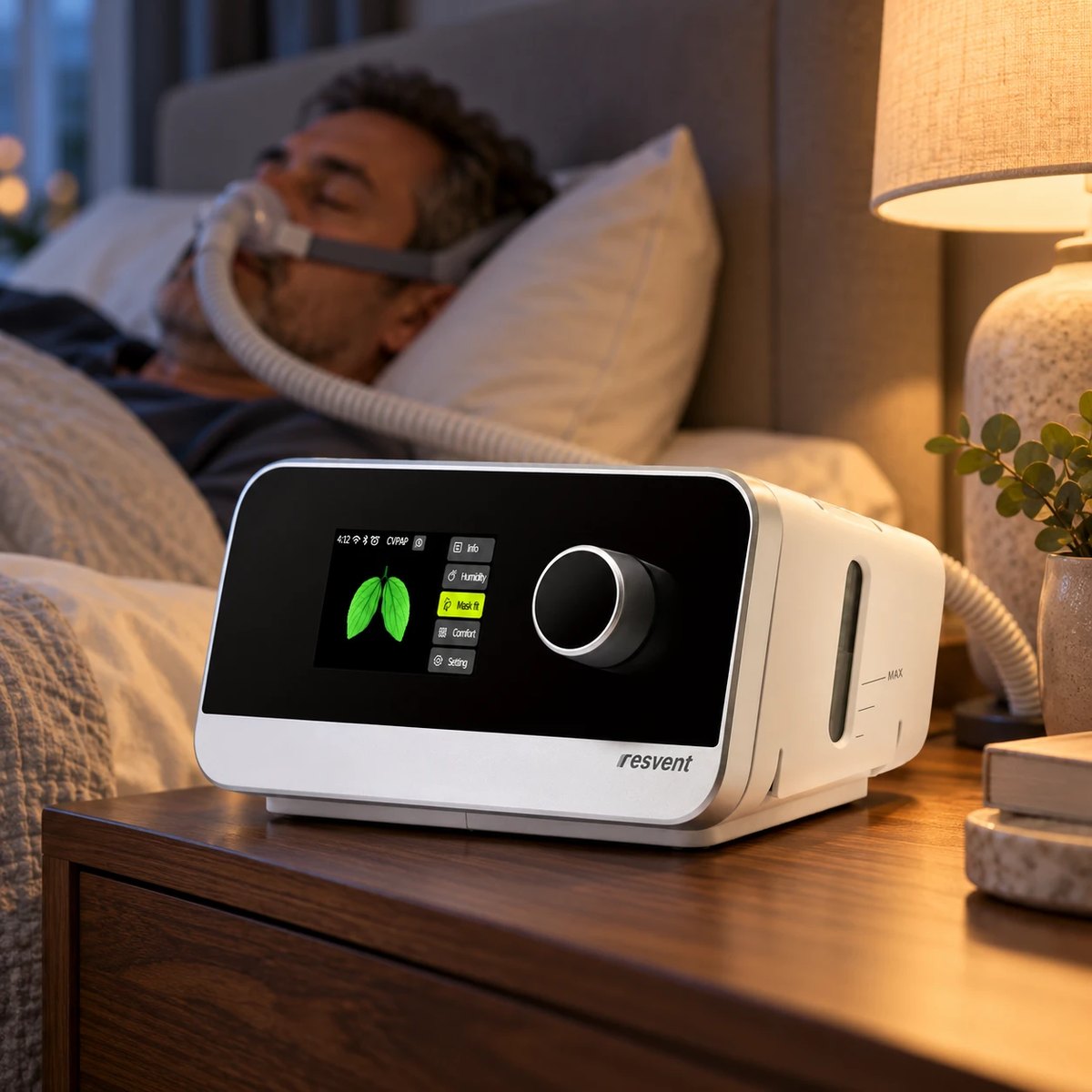
PAP therapy is the first-line treatment for moderate to severe obstructive sleep apnea. The machine sends pressurized air through a hose and mask, which splints the throat open. It works while it is used: it does not remove the cause, but it prevents the pauses. Learn more in what a CPAP machine is and how it works.
- CPAP: one fixed pressure all night.
- APAP (auto CPAP): adjusts pressure between a prescribed minimum and maximum. Devices such as the iBreeze CPAP/APAP run both modes from 4 to 20 cmH₂O.
- BiPAP (bilevel): one pressure to inhale and a lower one to exhale, for specific cases such as central apnea, COPD overlap or hypoventilation. The iBreeze BPAP is one example.
The AASM recommends starting therapy with either home APAP or in-lab titration in adults without significant comorbidities, and suggests CPAP or APAP over BiPAP for routine treatment. The physician prescribes the device type and pressure. Compare the three modes in CPAP vs BiPAP vs APAP, browse our CPAP, APAP and BiPAP machine buying guide, or check how much a CPAP machine costs in Latin America.
Oral appliances
Custom mandibular advancement devices hold the lower jaw forward during sleep to widen the airway. The AASM recommends them for adults with obstructive sleep apnea who cannot tolerate CPAP or prefer an alternative, and advises a custom, titratable device fitted by a qualified dentist, followed by a sleep test to confirm the result.
Weight loss and lifestyle changes
For people with excess weight, losing weight can reduce apnea severity. Avoiding alcohol and sedatives near bedtime, quitting smoking and keeping regular sleep hours also help. In December 2024, the US FDA approved the first medication for moderate to severe obstructive sleep apnea in adults with obesity, tirzepatide, used with diet and exercise. Approval and availability vary by country, and it requires a prescription.
Positional therapy
Some people have apneas mainly when sleeping on their back, which a sleep study can show. Their physician may suggest a device or pillow that keeps them on their side.
Surgery and implants
Options for selected patients include tonsil removal (especially in children), nasal surgery, palate surgery, maxillomandibular advancement and hypoglossal nerve stimulation with an implanted device. These require evaluation by an ENT or maxillofacial surgeon.
| Treatment | Usually considered for | Keep in mind |
|---|---|---|
| CPAP or APAP | Moderate to severe OSA, or mild OSA with symptoms | Needs nightly use and a well-fitted mask |
| BiPAP | Central apnea, COPD overlap, hypoventilation or intolerance of high pressures | Prescribed and adjusted by a specialist |
| Oral appliance | OSA in patients who cannot tolerate or prefer not to use CPAP | Custom fit and a follow-up sleep test |
| Weight loss | People with overweight or obesity | Complements other treatments |
| Positional therapy | Apnea mostly when lying on the back | Must be confirmed by the sleep study |
| Surgery or implant | Selected anatomical cases | Specialist evaluation; results vary |
Adherence decides whether CPAP works
CPAP only protects the nights it is used. A widely used benchmark, the US Medicare definition, is at least 4 hours a night on 70 % of nights during 30 consecutive days in the first three months. Reaching it is hard: in a public hospital in Buenos Aires, objective adherence, measured from the device memory card or telemonitoring, was 40 %, and only 46 % of patients attended first-year follow-up visits.
- Right mask: correct type and size reduce leaks and discomfort. See CPAP masks and interfaces and the guide to the best CPAP mask for side sleepers.
- Humidification: a heated humidifier eases nasal and throat dryness.
- Ramp: pressure starts low and rises as the patient falls asleep.
- Early follow-up: the AASM recommends education at the start of therapy and suggests troubleshooting and telemonitoring support in the first weeks.
- Usage data: hours of use, leaks and residual AHI help care teams catch problems early. See how connected CPAP and oxygen concentrators work.
Patients should never change pressure settings on their own; adjustments are made by the treating clinician.
When to see a doctor
See a physician if you snore loudly and someone has noticed pauses in your breathing, if you fall asleep unintentionally during the day or while driving, or if your blood pressure is hard to control. A sleep specialist, pulmonologist, neurologist or ENT can order the right test.
Diagnosis and therapy for clinics, homecare providers and distributors
SysMed USA supplies Latin American providers wholesale across the whole patient pathway: the iApneaMate S3 home sleep test recorder for diagnosis, iBreeze CPAP/APAP and iBreeze BPAP devices with remote monitoring connectivity, and masks such as the iRiFiT N300. We support hospitals, clinics, homecare providers and distributors with sanitary registration documentation for each country. Request a wholesale quote.
References
- National Heart, Lung, and Blood Institute (NHLBI, NIH): Sleep Apnea
- Benjafield AV et al. Estimation of the global prevalence and burden of obstructive sleep apnoea. Lancet Respiratory Medicine, 2019
- Kapur VK et al. Clinical Practice Guideline for Diagnostic Testing for Adult Obstructive Sleep Apnea (AASM), 2017
- Patil SP et al. Treatment of Adult Obstructive Sleep Apnea with Positive Airway Pressure (AASM), 2019
- Ramar K et al. Clinical Practice Guideline for the Treatment of Obstructive Sleep Apnea and Snoring with Oral Appliance Therapy (AASM and AADSM), 2015
- FDA: FDA Approves First Medication for Obstructive Sleep Apnea (December 2024)
- CMS: Local Coverage Determination L33718, Positive Airway Pressure (PAP) Devices for the Treatment of Obstructive Sleep Apnea
- Rojas Mendiola RH, Smurra MV. Delays and adherence to sleep apnea treatment in a public hospital (in Spanish). Revista Americana de Medicina Respiratoria, 2023
Frequently Asked Questions
What are the symptoms of sleep apnea?
The most common symptoms of sleep apnea are loud, habitual snoring, breathing pauses witnessed by a bed partner, waking up choking or gasping, and excessive daytime sleepiness. Many people also report morning headaches, dry mouth, poor concentration, irritability and getting up at night to urinate.
Women may have less typical symptoms such as insomnia or fatigue, and children may snore, sleep restlessly or have behavior problems. Symptoms raise suspicion, but only a sleep study, either in-lab polysomnography or a home sleep test, can confirm sleep apnea. See our guide to sleep apnea diagnosis and treatment options.
Is untreated sleep apnea dangerous?
It can be. Each breathing pause lowers blood oxygen and triggers a stress response that raises blood pressure and heart rate. Over time, untreated sleep apnea is associated with high blood pressure, atrial fibrillation and other arrhythmias, heart attack, heart failure, stroke and type 2 diabetes. Daytime sleepiness also raises the risk of traffic and workplace accidents.
Treatment such as CPAP improves sleepiness and quality of life, and the American Academy of Sleep Medicine recommends it for adults with obstructive sleep apnea and excessive sleepiness. Anyone with loud snoring and witnessed pauses should see a physician about a sleep study.
Can sleep apnea go away?
In some people sleep apnea improves or resolves when its cause changes: significant weight loss in people with obesity, removal of large tonsils (especially in children) or other surgery for an anatomical problem. For most adults, though, obstructive sleep apnea is a chronic condition that needs long-term treatment.
CPAP and oral appliances control apnea while they are used; they do not remove the cause. If your weight or health changes significantly, your physician may repeat the sleep study and adjust or stop treatment. Do not stop prescribed therapy on your own.
Do you need a prescription to buy a CPAP machine?
Yes. CPAP, APAP and BiPAP machines are medical devices meant to be used under a physician's prescription. The usual path is a sleep study (in a sleep lab or at home), a diagnosis, and a prescription that sets the therapy type and pressure. Many specialist retailers in Latin America ask for the prescription before selling.
For clinics and homecare programs, a home recorder such as the iApneaMate S3 (AASM Type III) supports diagnosis outside the sleep lab. Pressure settings should only be changed under medical supervision.
When is a home sleep test with the iApneaMate S3 appropriate versus an in-lab polysomnography?
Home sleep testing (HST) with the S3 is appropriate for patients with high pre-test probability of moderate-to-severe OSA and no significant comorbidities that complicate diagnosis. This covers the majority of adult referrals, typically overweight patients presenting with snoring, witnessed apneas, and daytime sleepiness.
In-lab polysomnography (PSG) remains indicated for: suspected central sleep apnea, concurrent severe cardiopulmonary disease, neuromuscular disorders, pediatric patients, and cases where the home study is inconclusive or negative despite strong clinical suspicion. The practical advantage of HST: sleep labs in LATAM are scarce and expensive. Many markets have months-long PSG waitlists. The S3 lets clinicians diagnose and initiate treatment faster, at a fraction of the cost, in the patient's natural sleep environment, which often yields more representative data than a single night in an unfamiliar lab.