Types of CPAP Masks: Nasal, Pillows, Full Face, Hybrid and More
The six types of CPAP masks explained: how nasal, nasal pillow, full face, hybrid, total face and oral masks seal, who each suits, sizing and care.

Key Takeaways
- There are six types of CPAP masks: nasal, nasal pillows, full face (oronasal), hybrid, total face and oral. The first three cover most users.
- Nasal masks and nasal pillows suit nose breathers; full face and hybrid masks keep the seal when the mouth opens.
- A 2018 meta-analysis linked oronasal masks to higher pressures and less nightly use than nasal masks, so fit and follow up matter.
- Fit the mask lying down at the prescribed pressure and tighten the headgear only until it seals.
- US Medicare covers nasal cushions twice a month, full face cushions monthly and headgear every 6 months, a common replacement reference.
There are six types of CPAP masks: nasal masks, nasal pillow masks, full face (oronasal) masks, hybrid masks, total face masks and oral masks. The first three cover most people on CPAP. They differ in where the cushion seals: around the nose, at the nostrils, or over the nose and mouth. The right type depends on how you breathe during sleep, your sleep position, your face and the therapy your clinician prescribes. CPAP, APAP and BiPAP therapy require a prescription, and the mask type and size are best confirmed during a fitting with the sleep physician or respiratory therapist.
To compare the models we supply, see our CPAP masks catalog and buying guide.
CPAP mask types compared
| Mask type | Where it seals | Often suits | Main trade-off |
|---|---|---|---|
| Nasal | Around the nose, from the bridge (or just below it) to the upper lip | Nose breathers, first time users, side sleepers | The mouth must stay closed |
| Nasal pillows | At the nostril openings, with two soft pillows | Claustrophobia, beards, glasses, reading in bed | Air is aimed straight into the nostrils; the mouth must stay closed |
| Full face (oronasal) | Over the nose and mouth, or under the nose and over the mouth | Mouth breathers, frequent nasal congestion, higher prescribed pressures | Larger contact area and more places to leak |
| Hybrid | Over the mouth, plus nasal pillows or an under the nose cushion | Mouth breathers who want the nasal bridge and vision free | The under the nose seal is more delicate |
| Total face | Around the edge of the face, covering eyes, nose and mouth | People who cannot get a seal with other masks | Bulky and used less often |
| Oral | At the mouth only, with a seal over and behind the lips | Rare cases where nasal breathing is not possible | Few models; dryness is common |
Nasal masks
A nasal mask uses one triangular cushion that seals around the nose, usually from the nasal bridge to the upper lip. Some designs sit under the tip of the nose instead. The American Academy of Sleep Medicine (AASM) describes the nasal mask as the most common type of CPAP mask.
- Pros: natural feeling airflow, a stable seal when you move, and a lower profile than a full face mask.
- Cons: the mouth has to stay closed, a blocked nose makes it hard to use, and some people get marks on the nasal bridge.
- Often suits: people who breathe through the nose, first time CPAP users and side sleepers.
Research supports starting with a nasal interface when the nose is clear. A 2018 meta-analysis of 13 trials and 4,563 patients, published in Chest, found that oronasal masks were linked to slightly higher CPAP pressures, more residual breathing events and about 48 fewer minutes of use per night than nasal masks.
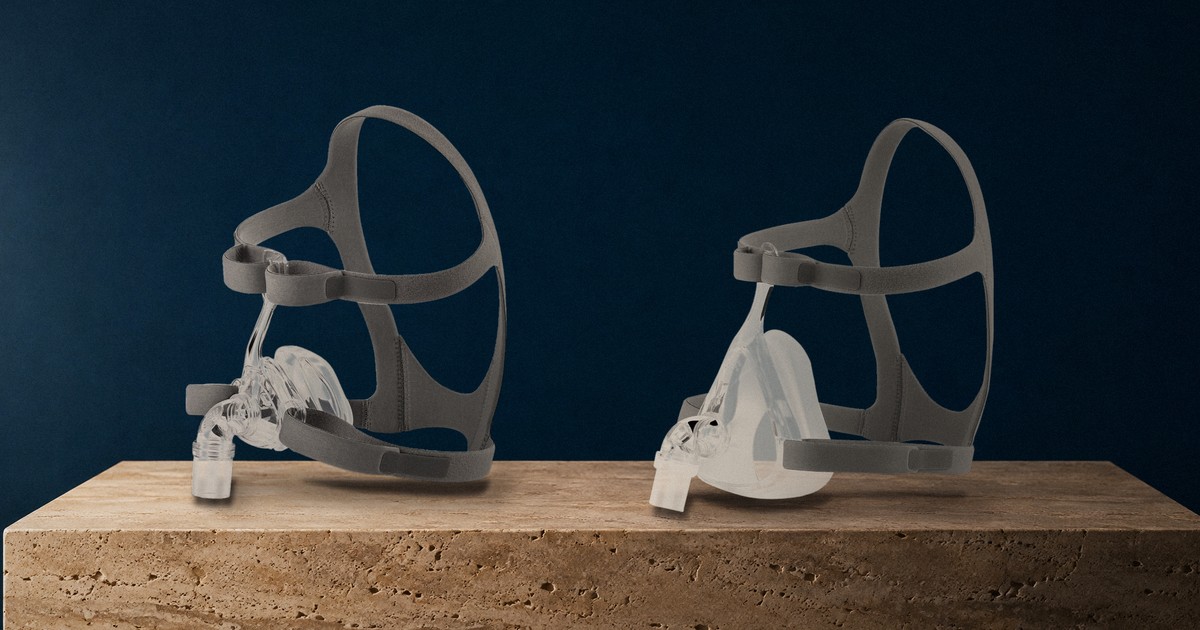
The iRiFiT N300 nasal mask is an example of this type: a single soft silicone cushion seals around the nose, with an adaptive nasal wing structure, a quiet swallowtail diffuser vent and S, M and L cushions included in every unit.
Nasal pillow masks
Nasal pillow masks seal at the opening of each nostril with two small, soft silicone pillows held by a light frame and headgear. They have the least contact with the face of any type.
- Pros: very light, with an open field of vision; good with glasses, beards and claustrophobia.
- Cons: air is aimed straight into the nostrils, which some people find drying or uncomfortable, especially at higher pressures; the mouth must stay closed.
- Often suits: nose breathers who want minimal contact, and active sleepers.
Nasal pillows vs nasal mask
Both are nasal interfaces, so the choice comes down to comfort. Pillows sit at the nostrils and feel almost invisible; a nasal mask spreads contact over a wider area, which many users find steadier when they turn over and gentler when the prescribed pressure is higher. Neither one solves persistent mouth breathing on its own. Note that the iRiFiT N300 is a nasal mask, not a nasal pillow mask.
Full face (oronasal) masks
A full face mask covers the nose and mouth with one cushion, so the seal holds even when the mouth opens during sleep. Traditional designs rest on the nasal bridge, while minimal contact designs seal under the nose and over the mouth. The AASM notes that this type may help people who have air leaks with a nasal mask.
- Pros: works with mouth breathing and nasal congestion, and is a common choice when the clinician prescribes higher pressures or bilevel (BiPAP) therapy.
- Cons: more contact with the face, more points where air can leak (often toward the eyes) and a bulkier feel.
- Often suits: mouth breathers and people with frequent nasal congestion. Our guide to the best CPAP mask for mouth breathers covers this choice in detail.
The iRiFiT F300 full face mask is an example: it uses an adaptive "V" rebound silicone cushion, soft fabric headgear and an anti-asphyxia valve, with S, M and L cushions in every unit.
Hybrid masks
A hybrid mask combines a cushion over the mouth with nasal pillows or a cushion that seals under the nose. It is usually held by lower headgear straps without a forehead support, so the nasal bridge and the field of vision stay free.
- Pros: handles mouth breathing without touching the nasal bridge, and works with glasses.
- Cons: the under the nose seal can shift when you move.
- Often suits: mouth breathers who feel confined by a traditional full face mask.
Total face masks
A total face mask seals around the outer edge of the face and covers the eyes, nose and mouth. Because the seal rests on the forehead, cheeks and chin, it puts no pressure on the nose. It is used less often, mainly when other masks cannot seal or cause skin breakdown.
Oral masks
An oral mask delivers air through the mouth only, with a seal that sits over and behind the lips. It is the least common type and is generally considered when nasal breathing is not possible and other masks have not worked. Because the air bypasses the nose, which normally warms and moistens it, users often need humidification to avoid dryness.
How to choose the right CPAP mask type
Many people try more than one mask before settling. These factors usually guide the choice:
- How you breathe during sleep: nose breathers usually start with a nasal mask or pillows; mouth breathers usually need a full face or hybrid mask, or a nasal mask with a chin strap if the clinician agrees.
- Nasal congestion: frequent allergies, colds or a blocked nose make nasal interfaces harder to use.
- Sleep position: low profile nasal masks and pillows suit side and stomach sleepers. See our guide to the best CPAP mask for side sleepers.
- Prescribed therapy: the physician sets the device type and pressure (see CPAP vs BiPAP vs APAP); changing the mask does not change the prescription.
- Face and comfort: facial hair, glasses, claustrophobia, skin sensitivity and dentures all affect the fit.
CPAP mask sizing and fitting
A good fit check follows the same steps for every mask type:
- Measure with the manufacturer's sizing guide, not with a size from another brand.
- Put the mask on lying down, in your usual sleep position, with the device running at the prescribed pressure.
- Tighten the headgear only until the cushion seals. Overtightening folds the cushion, opens new leaks and leaves red marks.
- Check the fit again after weight changes, dental work or a change of mask model.
Air flowing out of the small exhalation vent is normal and is not a leak.
Cushion materials
- Silicone: the most common material; durable and washable with mild soap and water.
- Gel: a thicker gel layer that molds to the face, at the cost of extra weight.
- Memory foam: soft and breathable, popular with people who react to silicone, but it cannot be washed like silicone and is replaced more often.
- Fabric liners: a textile layer between skin and cushion can reduce marks and leak noise.
Headgear, frames and connections
Headgear is the set of elastic straps that holds the mask, from simple straps on pillow masks to four point headgear with a forehead support. Some masks route the tube over the top of the head, which helps people who move a lot. Masks with magnetic clips carry manufacturer warnings for people with certain metal implants or medical devices, so check the manual.
Most masks have a swivel elbow, a built in exhalation vent and a standard 22 mm connection, so they work with most CPAP, APAP and BiPAP devices, including the iBreeze CPAP/APAP. Full face masks also include an anti-asphyxia valve that lets you breathe room air if the device stops.
CPAP mask replacement schedule
Cushions lose their seal as the silicone ages. Follow the manufacturer's instructions first. A widely used reference is the usual maximum quantity of supplies that US Medicare covers, published in the CMS local coverage determination for PAP devices (L33718):
| Part | Usual replacement (Medicare reference) |
|---|---|
| Nasal mask cushions | 2 per month |
| Nasal pillows | 2 per month |
| Full face mask cushion | 1 per month |
| Complete nasal mask | 1 every 3 months |
| Complete full face mask | 1 every 3 months |
| Hybrid (oral and nasal) mask | 1 every 3 months; its cushions and pillows 2 per month |
| Headgear and chin strap | 1 every 6 months |
| Standard tubing | 1 every 3 months |
These are coverage limits, not a measure of wear: replace any part sooner if it hardens, tears or stops sealing.
How to clean a CPAP mask
The National Heart, Lung, and Blood Institute (NHLBI) advises cleaning the mask and tube every day, and the AASM recommends setting a regular weekly time to wash the mask, tubing and headgear. In practice:
- Daily: wash the cushion with warm water and mild soap, rinse well and let it air dry out of direct sunlight.
- Weekly: take the mask apart, wash every part and hand wash the headgear.
- Before bed: wash your face; skin oils and creams shorten cushion life.
The FDA recommends mild soap and water as described in the owner's manual, notes that no device is FDA cleared or approved for cleaning CPAP machines, and warns that ozone and UV light can break down masks and hoses.
Supplying CPAP masks to clinics and homecare programs
For hospitals, sleep clinics, homecare providers and distributors, masks are a recurring consumable: most programs stock at least one nasal and one full face option and plan cushion replacement per active patient. SysMed USA supplies the iRiFiT N300 nasal mask and the iRiFiT F300 full face mask, both with a standard 22 mm connection. Request a wholesale quote with the volumes and size mix your program needs.
References
- American Academy of Sleep Medicine, Sleep Education: CPAP
- National Heart, Lung, and Blood Institute (NIH): CPAP
- Centers for Medicare & Medicaid Services: LCD L33718, Positive Airway Pressure (PAP) Devices for the Treatment of Obstructive Sleep Apnea
- U.S. Food and Drug Administration: Do You Need a Device That Claims to Clean a CPAP Machine? (2024)
- Andrade RGS et al. Nasal vs Oronasal CPAP for OSA Treatment: A Meta-Analysis. Chest (2018)
- Rowland S et al. Comparing the Efficacy, Mask Leak, Patient Adherence, and Patient Preference of Three Different CPAP Interfaces. Journal of Clinical Sleep Medicine (2018)
Frequently Asked Questions
What type of CPAP mask is best?
There is no single best CPAP mask: the right one is the type the patient keeps on all night without leaks. A nasal mask is the usual starting point for people who breathe through the nose, and it suits side sleepers. A full face (oronasal) mask is the better choice for mouth breathers, frequent nasal congestion or higher pressures such as BiPAP. Nasal pillows give the least facial contact and help with claustrophobia or facial hair.
The prescribing physician or respiratory therapist should confirm the type and size during fitting. SysMed USA supplies the iRiFiT N300 nasal mask and the iRiFiT F300 full face mask.
How often should you replace a CPAP mask?
Follow the manufacturer's instructions first. A widely used reference is the US Medicare replacement schedule: nasal cushions and nasal pillows every 2 weeks, full face cushions every month, mask frames every 3 months and headgear every 6 months. Replace any part sooner if the silicone hardens, tears or no longer seals, or if the headgear loses its stretch.
Clinics and homecare providers can turn these intervals into a consumables program per patient. Replacement cushions for the iRiFiT N300 and F300 are available separately in bulk from SysMed USA.
How do I choose the right CPAP mask size?
Start with the manufacturer's sizing guide, then confirm the fit with the device running at the prescribed pressure and the patient lying in their usual sleep position. The right size seals with the headgear only snug: if the straps have to be overtightened to stop a leak, the size or the cushion is wrong.
The iRiFiT N300 and the iRiFiT F300 include S, M and L cushions in every unit, so the fitter can try sizes on the spot without opening extra boxes.
What is the difference between nasal pillows and a nasal mask?
Nasal pillows seal at the nostril openings with two small, soft silicone pillows, while a nasal mask uses one cushion that covers the whole nose, from the bridge or just below it down to the upper lip. Pillows have the least facial contact and leave the field of vision open, which helps with glasses, beards and claustrophobia. A nasal mask spreads contact over a wider area, which many users find steadier when they move and more comfortable if air aimed into the nostrils feels irritating.
Both need the mouth to stay closed. The iRiFiT N300 is a nasal mask, not a nasal pillow design.
How do you clean a CPAP mask?
Follow the mask manual first. As general guidance, NHLBI advises cleaning the mask and tube every day, and the AASM recommends a regular weekly time to wash the mask, tubing and headgear. Wash the cushion in warm water with mild soap, rinse well and let it air dry away from direct sunlight; hand wash the headgear. Washing your face before bed reduces the skin oils that wear out the cushion.
The FDA notes that most mask parts can be cleaned with mild soap and water as described in the manual, and warns that ozone and UV light can break down masks and hoses.